
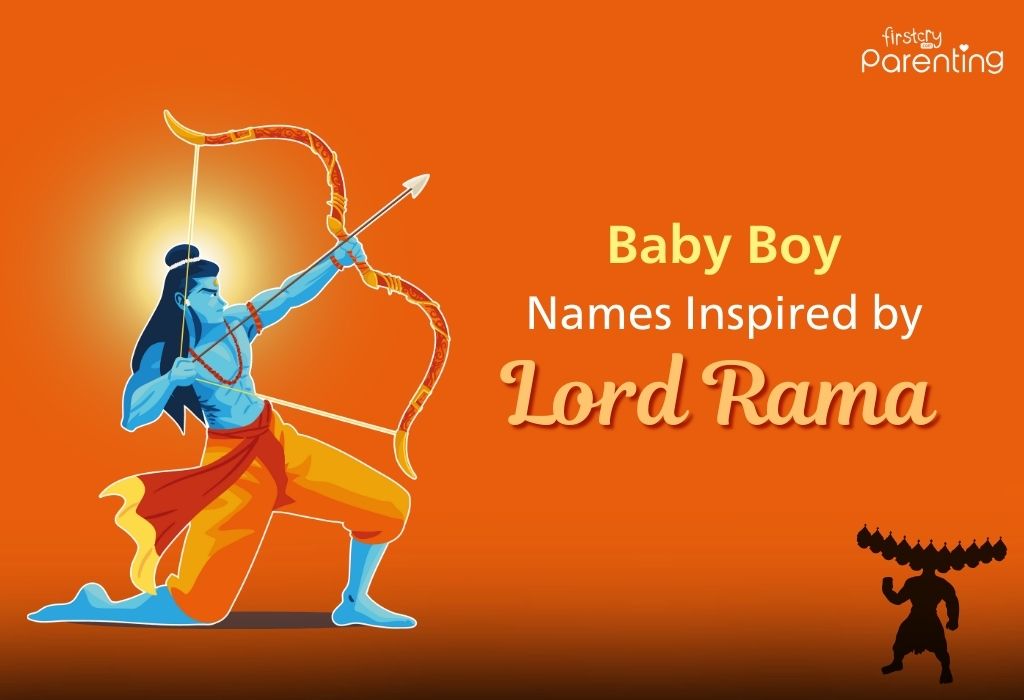
120 Lord Rama Names For Baby Boys





Medically Reviewed By
Dr. Siddharth Arora
(Nutritionist)


Choosing a name for your baby boy can be a profound and delightful journey, especially when you seek inspiration from divine sources. Lord Rama, revered as a virtuous and heroic deity in Hindu mythology, offers a treasure trove of names that resonate with cultural and spiritual significance. Exploring the different names for Lord Rama can provide a rich list of options for your child. From the ancient scriptures, the 1000 names of Lord Rama shine as symbols of valor, compassion, and wisdom. In this article, we have given a list of 120 Lord Rama names for baby boy, each echoing the glorious traits of this beloved god. Whether you are seeking a traditional or unique name, our selection of god Rama names will guide you in finding the perfect choice of name to bless your child with a legacy of greatness.
Priya
Agastya
Anaya
Krishna
Vrishaparvaa
Akshara
Sumedha
Paramatma
Aditya
Achyuta
Keshava
Mohan
Madan
Parthasarthi
Sarvapalaka
Sahasraakash
Vasudev
Vishwarupa
Ajaya
Murali
Sakshi
Sudarshana
Sahasrajit
Murlimanohar
Punyah
Amrut
Adidev
Anaadih
Aparajeet
Adbhutah
Ajanma
Anandsagar
Anantajit
Balgopal
Dayanidhi
Devakinandan
Devadidev
Dwarkapati
Dharmadhyaksha
Govinda
Gopal
Murlidhar
Gyaneshwar
Gopalpriya
Hrishikesh
Hiranyagarbha
Jayantah
Janardhana
Jagadguru
Jyotiraaditya
Kamalnayan
Kamsantak
Lakshmikantam
Lokadhyaksha
Madhava
Vishwamurti
Narayana
Padmahasta
Prajapati
Parampurush
Parabrahmana
Shyam
Shreshta
Shrikanta
Shantah
Suresham
Sahasrapaat
Sarvajana
Swargapati
Satyavachana
Vishwatma
Vishwakarma
Vardhamaanah
Vaikunthanatha
Vishwadakshinah
Yogi
Yadavendra
Nandgopala
Anaya
Avyukta
Krishna
Danavendra
Vrishaparvaa
Kanjalochana
Boipelo
Kalsam
Ekata
Unique Names of Lord Rama for Baby Boy With Meanings
In the quest for a meaningful and modern name for your newborn, the modern names of Lord Rama for baby boy offer a blend of tradition and contemporary appeal. The other names of Lord Rama, each carrying a unique story and significance, present a variety of choices for parents seeking a distinctive name. This section unveils the various names of Lord Rama, allowing you to explore a range of options that resonate with cultural depth and timeless values. From the revered Lord Shri Rama names to the more uncommon selections, each name in our list is more than just a label; it’s a connection to the rich heritage and virtues of one of Hinduism’s most admired deities. Let these Lord Rama names for baby boy be your guide in choosing a name that embodies both history and the promise of a bright future.
1. Avyukta
- Gender: Boy
- Meaning: Inexpressible, Crystal clear, One with a clear mind, Unconfused Being, One of the many names of Lord Krishna
- Religion: Hindu
- Numerology: 2
- Rashi: Mesha (A, L, E, I, O)
- Nakshtra: Krithika (A, Ee, U, EA, I, E)
- Origin:Indian
2. Danavendra
- Gender: Boy
- Meaning: Granter of boons
- Religion: Hindu
- Numerology: 3
- Rashi: Meena (D, CH, Z, TH)
- Nakshtra: Purvabhadra (Se, So, Da, Di)
- Origin:NA
3. Kanjalochana
- Gender: Unisex
- Meaning: Lotus eyed God
- Religion: Hindu
- Numerology: 1
- Rashi: Mithun (K, CHH, GH, Q, C)
- Nakshtra: Mrigashiras (Ve, Vo, Ka, Ki, Be, Bo)
4. Ananta
- Gender: Girl
- Meaning: Infinite, Endless, Eternal, The earth
- Religion: Hindu
- Numerology: 6
- Rashi: Mesha (A, L, E, I, O)
- Nakshtra: Krithika (A, Ee, U, EA, I, E)
5. Sarveshwar
- Gender: Boy
- Meaning: Lord of all gods
- Numerology: 8
- Origin:NA
6. Devesh
- Gender: Boy
- Meaning: King of the gods, Another name for Indra, God of the gods, Another name of Lord Shiva.
- Religion: Hindu
- Numerology: 9
- Rashi: Meena (D, CH, Z, TH)
- Nakshtra: Revathi (De, Do, Cha, Chi)
- Origin:Indian,Sanskrit,Bengali
7. Padmanabha
- Gender: Boy
- Meaning: One with lotus in his navel, Lord Vishnu, One of many names of Lord Vishnu signifying his form with lotus in navel
- Religion: Hindu
- Numerology: 7
- Rashi: Kanya (P, TTHH)
- Nakshtra: Uttara Phalguni (To, Pa, Pi)
- Origin:Indian
8. Shyamsundara
- Gender: Boy
- Meaning: Lord of the beautiful evenings
- Religion: Hindu
- Numerology: 9
- Rashi: Kumbha (G, S, Sh)
- Nakshtra: Sathabisham (Go, Sa, Si, Su, S, See)
- Origin:NA
9. Nirguna
- Gender: Girl
- Meaning: Attribute less, Fetterless
- Religion: Hindu
- Numerology: 3
- Rashi: Vruschika (N, Y)
- Nakshtra: Anuradha (Na, Nee, Noo, Nae, Ni, Nu, Ne)
10. Yoginampati
- Gender: Unisex
- Meaning: Lord of the yogis, Lord of all the yogis.
- Religion: Hindu
- Numerology: 4
- Rashi: Vruschika (N, Y)
- Nakshtra: Moola (Yo, Ye, Bhi, Bha, Bh)
- Origin:Sanskrit,Malayalam
FAQs
1. How Can You Choose the Correct Lord Rama Names for Your Boy?
Choosing the right name from Lord Rama’s many names for your boy involves considering the meaning and significance of each name. Reflect on the qualities you wish to see in your child and select a name that resonates with those traits. For instance, if you desire your son to be known for wisdom, choose a name like ‘Chinmay’ (One with Full Knowledge). Additionally, consider the ease of pronunciation and potential nicknames. Consulting with family members or religious guides can also provide insights and help in making a meaningful choice.
2. Are there any Traditions Associated with Naming a Baby Boy After Lord Rama?
Naming a baby boy after Lord Rama often follows traditional Hindu naming ceremonies, such as the ‘Namakaran’ ceremony, where the child is officially given a name on the 11th or 12th day after birth. The chosen name is usually influenced by the child’s birth star or ‘Nakshatra’, as per Vedic astrology. In some traditions, parents or elders choose a name that begins with a specific syllable corresponding to the baby’s ‘Nakshatra’. Naming a child after Lord Rama is also seen as a way to bestow the child with the qualities of this revered deity, such as righteousness, bravery, and compassion.
3. What’s the Meaning Behind Calling Lord Rama by the Name ‘Shri Rama’?
The name ‘Shri Rama’ holds profound significance in Hindu culture. ‘Shri’ is a term of respect and reverence, often used to denote wealth, grace, virtue, and auspiciousness. By calling Lord Rama as ‘Shri Rama’, one acknowledges and honors his divinity, virtues, and the embodiment of dharma (righteousness). This title also reflects the deep respect and adoration that devotees have for Lord Rama, highlighting his status as a divine and noble hero in Hindu mythology and the Ramayana. The use of ‘Shri’ emphasizes Lord Rama’s role as an ideal king, warrior, and upholder of moral values.
Baby Names Finder
In this comprehensive list, we have provided a diverse selection of names associated with Lord Rama thatcan be considered for naming baby boys. These names, inspired by Lord Rama’s virtues and attributes, carry deep cultural and spiritual significance. Whether you’re looking for traditional choices like “Raghava” or unique options like “Harakodandarama,” you’ll find a range of names that reflect qualities such as courage, kindness, victory, and divinity. With 108 names of Lord Rama and more, this collection offers meaningful options for parents seeking baby boy names inspired by Lord Ram. Choose a name that embodies the values and blessings of Lord Rama for your precious child, exploring the rich tapestry of different names of Lord Rama for baby boys.
 Embarking on the journey of childbirth is a profound and transformative experience for expectant mothers. The transition phase of labor, often regarded as one of the most intense parts of childbirth, marks a significant turning point in this journey. This phase, typically the final stage before the arrival of your little one, can be both physically and emotionally challenging. Understanding its signs and learning effective ways to cope are crucial for a more positive and empowered birthing experience. In this article, we will delve into the depths of the transition phase, offering insights, guidance, and compassionate support to help you navigate this pivotal time with confidence and grace.
“
Children from an early age should develop a strong base of moral values that help them to be good human beings.
Expert Note
Dr. Amit GuptaNutritionist
What Is Transition In Labor?
Transitional labor, the phase just before childbirth, is often considered the most challenging part of the labor process. This phase is particularly demanding due to its intense physical and emotional aspects. Physically, the contractions during transitional labor are the most powerful and closest together, occurring typically every two to three minutes and lasting up to 90 seconds each. These contractions are not only more frequent and prolonged but also more intense, leading to significant discomfort and pain.
Moral of the story
Look at the positive aspects of someone without emphasizing the limitations.Why Is This Phase of Labour Challenging?
Transitional labor, the phase just before childbirth, is often considered the most challenging part of the labor process. This phase is particularly demanding due to its intense physical and emotional aspects. Physically, the contractions during transitional labor are the most powerful and closest together, occurring typically every two to three minutes and lasting up to 90 seconds each. These contractions are not only more frequent and prolonged but also more intense, leading to significant discomfort and pain.
Quick tips
- Repetition is the key to helping the baby learn how to walk.
- Hence, it is best to repeat these games and exercises multiple times a day.
- It is also preferred that the baby learn how to walk on barefoot to develop a better sense of balance.
- If your baby does not start walking even after 18 months, you should consult a doctor to rule out any developmental delays.
Emotionally, this phase can be overwhelming for many women. The sheer intensity of the contractions, combined with fatigue from the earlier stages of labor, can lead to feelings of anxiety, irritability, and a sense of being overwhelmed. This emotional rollercoaster is a natural response to the physical strain and the anticipation of the impending birth.
“
Repetition is the key to helping the baby learn how to walk. Hence, it is best to repeat these games and exercises multiple times a day. It is also preferred that the baby learn how to walk on barefoot to develop a better sense of balance. If your baby does not even after 18 months, you should consult a doctor to rule out any developmental delays
Nitesh Duseja
Moreover, transitional labor marks a critical point where the body undergoes significant changes to allow for the baby’s passage. This rapid progression can be daunting as the body and mind struggle to keep pace with these changes. Understanding and being prepared for the rigors of transitional labor is crucial for expectant mothers, as it helps them develop coping strategies to manage this challenging yet pivotal phase of childbirth.
Signs of Transition In Labor
As an expectant mother approaches the transition phase of labor, certain distinct signs become evident. These signs, both emotional and physical, signal that the body is preparing for the final stage of childbirth. It’s crucial to recognize these signs to better understand and navigate through this challenging phase.
Transition labor, while being the most intense part of childbirth, is typically also the shortest. The duration of this phase can vary significantly among different women and even from one pregnancy to another for the same woman. On average, transition labor lasts anywhere from 15 minutes to several hours.
For first-time mothers, this phase may take longer, often lasting up to three hours. However, for women who have given birth previously, the duration of transition labor can be significantly shorter, sometimes lasting only a few minutes. It’s important to remember that these time frames are approximate and can differ widely based on individual circumstances and the unique progression of each labor.

The key to navigating this phase is understanding that, despite its intensity, it is a temporary and necessary step towards the incredible moment of meeting your baby. Being prepared for the variability in duration can help manage expectations and reduce anxiety during labor.
How You Can Deal With Transition Labor?
Managing the transition stage of labor effectively can make a significant difference in your childbirth experience. Here are several strategies to cope with the intense transition labor contractions and the emotional challenges of this phase:
1. Breathing Techniques
Practicing deep, controlled breathing can help manage the pain of transition labor contractions. Focusing on your breath provides a distraction from the discomfort and helps maintain a sense of calm.
2. Movement and Positioning
Changing positions or moving around can alleviate some discomfort. Whether it’s walking, swaying, or rocking, movement can be a powerful tool in dealing with the intensity of contractions.
3. Utilize Support
Having a supportive partner, doula, or healthcare provider can provide immense emotional and physical support. They can offer words of encouragement, physical assistance, and help you stay focused and calm.
4. Visualization and Relaxation
Visualizing a peaceful scene or imagining the process of meeting your baby can be soothing. Relaxation techniques such as meditation or listening to calming music can also be beneficial.
5. Hydrotherapy
The use of water, whether in a shower or a birthing pool, can provide significant pain relief. The warmth and buoyancy of the water can be soothing and help ease the intensity of the contractions.
6. Acceptance and Mindset
Embracing the process and understanding that each contraction brings you closer to meeting your baby can be empowering. A positive mindset can significantly impact your ability to cope with the demands of the transition stage of labor.
Implementing these strategies can help you navigate through the transition phase with more confidence and ease, bringing you closer to the momentous experience of childbirth.
Was This Article Helpful?

Parenting is a huge responsibility, for you as a caregiver, but also for us as a parenting content platform. We understand that and take our responsibility of creating credible content seriously. FirstCry Parenting articles are written and published only after extensive research using factually sound references to deliver quality content that is accurate, validated by experts, and completely reliable. To understand how we go about creating content that is credible, read our editorial policy here.
Lorem Ipsum is simply dummy text of the printing and typesetting industry. Lorem Ipsum has been the industry’s standard dummy text ever since the 1500s, when an unknown printer took a galley of type and scrambled it to make a type specimen book. It has survived not only five centuries, but also the leap into electronic typesetting, remaining essentially unchanged. It was popularised in the 1960s with the release of Letraset sheets containing Lorem Ipsum passages, and more recently with desktop publishing software like Aldus PageMaker including versions of Lorem Ipsum.
- Author
- Expert Reviewer