
Interesting Facts About Earthquakes for Kids




Our editorial process ensures that the information we provide is well-researched and reliable. Learn more about our approach in the FirstCry Parenting editorial policy.
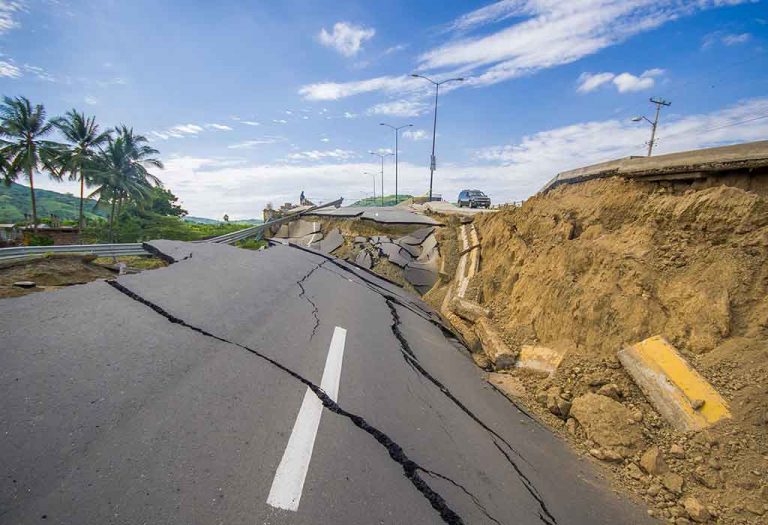
An earthquake occurs when the Earth’s surface shakes violently. This shaking is caused by the movement in the Earth’s outermost layer. The occurrence of an earthquake is a natural disaster but it is frightening and can cause damage as any other natural disaster would do. If you want to educate your child about earthquakes, we have some child-friendly information on the same that you can read to your child without frightening him.
Interesting Facts and Information About an Earthquake for Children
Listed below are 15 interesting and amazing kid-friendly earthquake facts.
- There are twenty plates in the earth’s crust which move slowly, continuously and at different speeds. Geologists believe that the fastest shifting of a plate might be 6-inches (15 centimetres) a year. Earthquakes occur when a plate bumps, scrapes, or drags along another plate.
- Earthquakes take place due to three geological faults – normal, reverse, and strike-slip. Normal faults occur in regions where there has been an expansion in the earth’s crust and reverse faults take place in areas where the earth’s crust contracts. Strike-slip faults occur when two sides of a fault slip horizontally and become a steep on both sides.
- Earthquakes are always followed by an aftershock and sometimes even a foreshock which is both of lower magnitudes than the mainshock.
- Every year, about half a million earthquakes rock the earth but we do not feel the tremors because they are too small or too far below the surface.
- When earthquakes take place, seismic waves, a type of shock energy, travels through the earth’s crust.
- Studying earthquakes or trying to predict one is a part of seismology. Despite many research works, to date seismologists have not been able to come up with an accurate method or instrument to predict future earthquakes.
- The magnitude and length of earthquakes are measured with the help of a machine called the seismograph.
- The strength of an earthquake is measured on the Richter scale. A point’s increase in the scale signifies ten-times more of the shaking and 33-times more amount of the energy.
- The place of origin or the epicentre of an earthquake is located by scientists using the different speeds of the seismic waves of the earthquake.
- When continents move at different speeds and in different directions, they brush or collide against other landmasses or continents and break apart. This is known as plate tectonics and it is one of the reasons why earthquakes take place.
- A huge wave in the ocean called tsunami can cause massive damages when it comes straight crashing into the areas near the shore. These huge waves are a result of underwater earthquakes or volcanic eruptions.
- A major earthquake with a high magnitude can cause catastrophes like tsunamis, floods, fire, landslides, damage to the property and outbreak of diseases.
- Earthquakes occur mostly in the regions of volcanoes. They can be caused by tectonic movements as well as the magma movement in the volcanoes. They can also be an indication of imminent volcanic eruptions in the region.
- Most earthquakes occur in the ‘Ring of Fire’ region in the Pacific Ocean near Japan. In the United States of America, Alaska is the most earthquake-prone state followed by California.
- Earthquakes usually last for less than a minute, but they can cause potential damage in such a short span of time.
Earthquakes can be devastating and can cause huge loss of life and property and there is no way that we know of, yet to predict or prevent an earthquake, but that doesn’t mean one needs to be scared of it. They can occur at any time of the year and anywhere, so the least you can do is educate your kids about the same and teach them earthquake drills at home and ensure that they are taught the same in schools.
Also Read:
Science Facts for Children
Fascinating Rainbow Facts for Children
Interesting Facts about Clouds for Children
Was This Article Helpful?
Parenting is a huge responsibility, for you as a caregiver, but also for us as a parenting content platform. We understand that and take our responsibility of creating credible content seriously. FirstCry Parenting articles are written and published only after extensive research using factually sound references to deliver quality content that is accurate, validated by experts, and completely reliable. To understand how we go about creating content that is credible, read our editorial policy here.
- Author