
List of Birds That Start With X




For many bird enthusiasts and young learners, the fascinating world of our feathered friends often offers unexpected wonders. While it’s common knowledge to identify birds like sparrows or eagles, there’s a unique thrill in discovering bird names that start with lesser-known letters of the alphabet. This list particularly dives into the letter ‘X’. Bird names that start with the letter X might not be as popular or frequent, but they are as intriguing as they are rare. Whether you’re a seasoned birder or you’re looking for ‘X’ letter bird names for preschoolers and kids to enrich their vocabulary, this guide is for you. Let’s embark on this feathery journey and introduce kids and adults alike to the delightful, albeit small, set of birds that have their names beginning with the letter X. It’s a fun and enlightening addition to any kid’s vocabulary and a treat for avid bird lovers!
List Of Common Birds That Start With X
The exploration of the avian world is vast and varied. When you dive deep into the ornithological lexicon, there’s always something new to learn. One such adventure is to discover birds beginning with the letter X. While the list may not be exhaustive due to the rarity of this initial, every bird name with an X holds its own allure.
1. Xantus’s Hummingbird
Scientific Name: Basilinna xantusii
Where Is It Found: Baja California Peninsula, Mexico
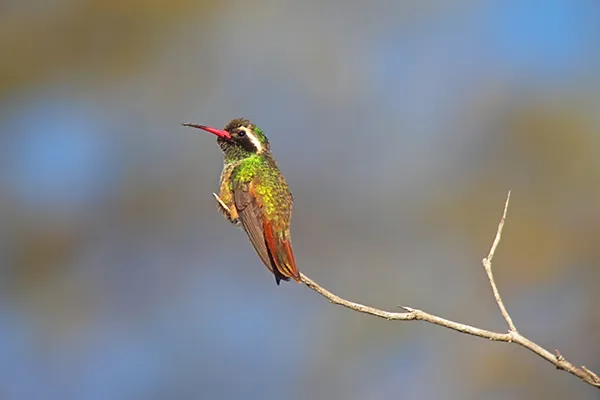
The Xantus’s Hummingbird, native to the Baja California Peninsula, is a beautifully striking bird. With a body length of about 3.5 inches, it showcases a shimmering green upper part, contrasting with its white underbelly. The male has a black face, which is complemented by a glowing red throat, while the female lacks a vibrant throat and has a more muted color palette. Their rapid wing beats and agile flight patterns are typical of hummingbirds, making them a captivating sight as they flit from flower to flower, sipping on nectar.
Interesting Facts
- This bird was named in honor of John Xantus, a Hungarian zoologist.
- The Xantus’s Hummingbird is known to have a special relationship with certain flowering plants, where they play a crucial role in pollination.
2. Xavier’s Greenbul
Scientific Name: Phyllastrephus xavieri
Where Is It Found: Eastern Africa, in countries like Tanzania and Mozambique
Xavier’s Greenbul is a songbird of modest size with predominantly green and yellow plumage. Their olive-green upperparts and yellow underparts give them perfect camouflage amidst the thickets and dense forests they inhabit. Their melodious calls can often be heard echoing in the forests, even if the bird remains unseen. They primarily feed on insects and fruits, making them an integral part of their ecosystem’s food chain.
Interesting Facts
- Despite its name, Xavier’s Greenbul has no known association with any individual named Xavier. It remains one of the mysteries of ornithology.
- This bird’s calls are often mistaken for those of other songbirds due to its diverse range of melodies.
3. Xingu Scale-backed Antbird
Scientific Name: Willisornis vidua
Where Is It Found: Xingu River region in the Amazon basin of Brazil
The Xingu Scale-backed Antbird is a small bird with intricate patterns on its back that resemble scales, leading to its descriptive name. Males are predominantly black with distinctive white scaling on their backs and wings, while females are browner with rufous scaling. They are often found in lower vegetation in forests, especially near water bodies, skulking in the undergrowth and rarely venturing out into open areas. Their diet consists mainly of insects and other small arthropods.
Interesting Facts
- The Xingu Scale-backed Antbird is named after the Xingu River region, a significant tributary of the Amazon. The dense forests surrounding this river offer a unique ecosystem, leading to the evolution of various endemic species.
4. Xinjiang Ground-Jay
Scientific Name: Podoces biddulphi
Where Is It Found: Deserts of Xinjiang province in western China
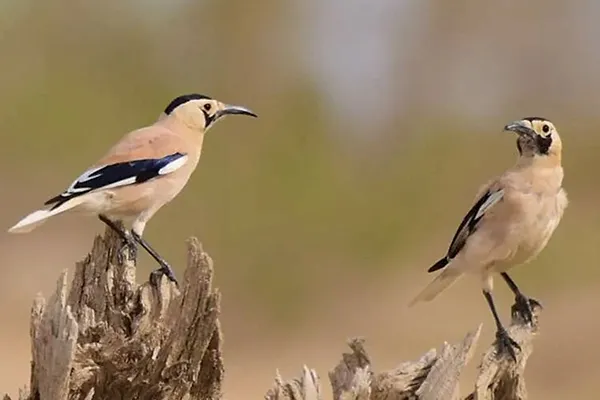
The Xinjiang Ground-Jay is a ground-dwelling bird, primarily found in the barren landscapes of Xinjiang’s deserts. This bird exhibits a sandy brown plumage, which provides excellent camouflage against the desert backdrop. With a sturdy beak and long legs, it scurries around the desert floor in search of food, mainly consisting of insects, seeds, and occasionally small vertebrates. Their nests are usually built on the ground, hidden among shrubs or rocks.
Interesting Facts
- Unlike many other birds, the Xinjiang Ground-Jay has adapted to sourcing water from its food. This ability reduces its dependence on water sources, a crucial adaptation for survival in its arid habitat.
5. Xacana Spinetail
Scientific Name: Synallaxis [or Certhiaxis] xacana
Where Is It Found: Eastern Brazil, in regions like Bahia and Minas Gerais
The Xacana Spinetail is a small and rather elusive bird, recognized for its long, pointed tail feathers and its brownish-gray plumage. Most striking are the russet wing patches that become visible when the bird is in flight. The Xacana Spinetail prefers grassy shrublands, often nesting close to the ground amid dense grass or shrubs. Its songs, characterized by sharp and repetitive notes, resonate across its preferred habitats during the early hours of the morning.
Interesting Facts
- The Xacana Spinetail is named after the Xacana, a native term in certain Brazilian indigenous languages.
- Despite its relatively small size, this bird has a loud call that can easily pierce through the morning chorus of other avian species.
6. Xingu Kingfisher
Scientific Name: Chloroceryle inda xinguensis
Where Is It Found: Xingu River and surrounding areas in Brazil
A sub-species of the Green-and-rufous Kingfisher, the Xingu Kingfisher has vibrant colors, with a striking combination of deep green and bright chestnut. Its robust bill is well-suited for its primary diet—fish. This bird prefers areas close to freshwater sources and is often seen perched on a branch overhanging water, from where it dives in to catch its prey.
Interesting Facts
- The Xingu Kingfisher’s name, like the Xingu Scale-backed Antbird, is derived from the Xingu River region.
- Being a subspecies, it has minor variations from its primary species, adapted to the unique environmental conditions of the Xingu basin.
7. Xantus’s Murrelet
Scientific Name: Synthliboramphus hypoleucus
Where Is It Found: Coastal regions of California in the USA and Baja California in Mexico
This small seabird has a sleek body with a predominantly white underbelly and a grayish-black upper body. It’s most active at night or during the early morning hours, making it a bit elusive to spot. The Xantus’s Murrelet is an adept diver, using its wings to propel itself underwater in search of fish and crustaceans.
Interesting Facts
- The Xantus’s Murrelet has two subspecies, each showcasing minor variations in their plumage.
- Their nocturnal habits are primarily a defense mechanism against predatory birds.
8. Xingu Parakeet
Scientific Name: Eupsittula cactorum xinguensis
Where Is It Found: Forests surrounding the Xingu River in Brazil
The Xingu Parakeet is characterized by its vibrant green body and distinctive reddish-brown patch on the forehead. It has a robust beak, perfect for cracking open seeds and fruits, which comprise a significant part of its diet. Social by nature, these parakeets are often seen in flocks, chattering away as they flit from one tree to another. Their sharp and sometimes cacophonous calls resonate deeply in the forests they inhabit.
Interesting Facts
- While it’s a subspecies of the Cactus Parakeet, the Xingu Parakeet has become synonymous with the Xingu River region due to its localized presence.
- Their sociable nature often leads to them forming large nesting colonies, ensuring safety in numbers.
9. Xantus’s Becard
Scientific Name: Pachyramphus aglaiae xantusi
Where Is It Found: Coastal regions of western Mexico
The Xantus’s Becard is a medium-sized bird with a distinctive crest, adding to its charming appearance. Males possess a grayish-black hue, while females display a rusty-brown shade, especially on their underparts. They are often found in subtropical or tropical moist lowland forests. Their diet predominantly consists of fruits, but they occasionally indulge in insects.
Interesting Facts
- Named in honor of the same John Xantus after whom the Xantus’s Hummingbird was named.
- The Xantus’s Becard showcases sexual dimorphism, with males and females having distinct colorations.
10. Xingu Woodpecker

Scientific Name: Celeus obrieni
Where Is It Found: Dense forests of the Xingu region in Brazil
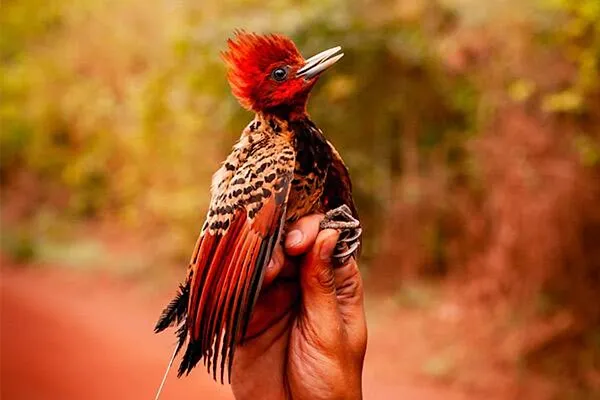
This rare woodpecker is medium-sized and has an intricate pattern of black and white feathers. Its most distinctive feature is its red crown, which stands out vividly against its primary body colors. Like other woodpeckers, it possesses a strong beak, which it uses to peck at tree trunks in search of insects. The drumming sound produced during this activity is a hallmark of its presence in the forest.
Interesting Facts
- The Xingu Woodpecker is one of the lesser-studied birds due to its remote habitat and elusive nature.
- Their presence is an indicator of a healthy forest ecosystem, as they play a vital role in controlling insect populations.
11. Xamini Weaver
Scientific Name: Ploceus xaminii
Where Is It Found: Swampy areas and wetlands of Central Africa, including regions in Uganda, Tanzania, and Kenya
With a bright yellow underbelly and intricate patterns of black and olive on its back, the Xamini Weaver stands out vividly in its wetland habitat. The males, especially during the breeding season, are brighter and more vibrant compared to the more muted females. These birds are known for their incredible weaving skills. Using grass and reeds, they construct intricate hanging nests over water, safe from most terrestrial predators.
Interesting Facts
- The Xamini Weaver’s Nests are engineering marvels. These hanging structures not only provide safety but also offer temperature regulation. The entrance, positioned at the bottom, ensures that potential threats like snakes find it difficult to access.
12. Xavante Sparrowhawk
Scientific Name: Accipiter xavantinorum
Where Is It Found: Savannas and open forests of Central Brazil
The Xavante Sparrowhawk is a sleek raptor, marked by its sharp eyes and agile flight. It has a predominantly gray plumage with subtle barring on its underparts. As a bird of prey, it has a keen sense of vision, allowing it to spot and swoop down on its prey, which mainly consists of smaller birds and insects.
Interesting Facts
- Named after the Xavante, an indigenous people of Brazil, the Xavante Sparrowhawk plays a crucial role in controlling populations of potential pest species, making it an essential part of the ecosystem’s balance.
13. Xingu Heron
Scientific Name: Ardea xinguensis
Where Is It Found: Riverbanks and wetlands of the Xingu Basin in Brazil
Sporting a majestic blue-gray color with white streaks, the Xingu Heron is an impressive sight. Standing tall on stilt-like legs, it patiently waits for the right moment to catch fish and aquatic insects. Its sharp beak, designed for precision, allows it to snap up prey in a fraction of a second.
Interesting Facts
- The Xingu Heron, like many other species from the Xingu region, highlights the rich biodiversity of the area.
- Its silent demeanor while hunting showcases its patience and focus, essential traits for survival in the wild.
14. Xantus’s Nightjar
Scientific Name: Antrostomus xantusi
Where Is It Found: Arid regions of southern Baja California, Mexico
Xantus’s Nightjar is a nocturnal bird adorned with mottled brown and gray feathers, perfectly camouflaging it against the desert floor. Their large eyes are well-suited for nighttime activity, assisting them in spotting flying insects, which form their primary diet. Their flight is silent and ghostly, often characterized by erratic movements to capture prey mid-air.
Interesting Facts
- This bird is named after the Hungarian ornithologist John Xantus de Vesey.
- Their ability to stay perfectly still during the day, blending seamlessly with their surroundings, often means they go unnoticed despite being in plain sight.
15. Xingu Cotinga
Scientific Name: Porphyrolaema xinguensis
Where Is It Found: Upper reaches of the Xingu River in Brazil
This bird is a real treat for the eyes. Males boast a deep violet hue, while females are mostly brown with a touch of violet on their rumps. The Xingu Cotinga prefers treetops and is often seen moving through the canopy in search of fruits, its primary diet. The striking color of the males plays a vital role during mating displays.
Interesting Facts
- Despite its bright coloration, the Xingu Cotinga is not easy to spot. It’s often heard before it’s seen, with its distinctive calls echoing through the Amazonian forest.
16. Xingu Toucanet
Scientific Name: Selenidera nattereri xinguensis
Where Is It Found: Forests surrounding the Xingu River in Brazil
A subspecies of Gould’s Toucanet, the Xingu Toucanet has the iconic large bill that toucans are famous for. Its body is adorned with green plumage, a blue eyering, and red undertail coverts. These birds are primarily frugivores, but they do occasionally consume insects and small vertebrates.
Interesting Facts
- Toucanets, including the Xingu variety, play an essential role in the ecosystem as seed dispersers. As they feast on fruits, the seeds are dispersed in their droppings, aiding in the propagation of many tree species.
17. Xenopsaris Albinucha
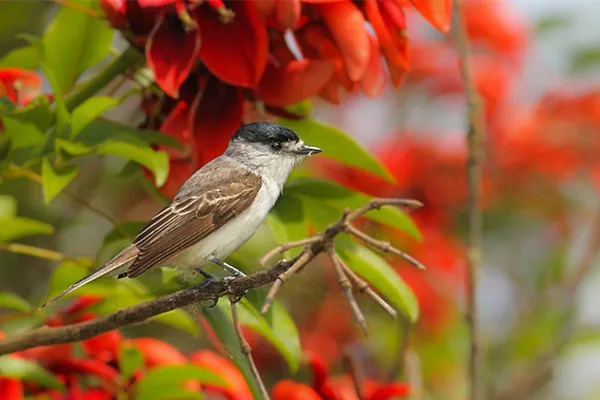
Scientific Name: Xenopsaris albinucha
Where Is It Found: Across various regions in South America, from Venezuela to Argentina
Commonly known as the White-naped Xenopsaris, this bird has a predominantly grayish-brown body, with its signature white nape standing out distinctly. It has a slender body and a long tail, and it primarily dwells in open woodlands and savannahs. Its diet includes insects and seeds, and it often forages in the undergrowth.
Interesting Facts
- Despite its plain appearance, the White-naped Xenopsaris has a melodious song that it uses both to communicate and to stake out its territory.
Other Birds Beginning With X
The realm of birds whose names commence with the elusive “x” isn’t limited to the few we’ve detailed above. While the letter “x” might be one of the least used letters in the English alphabet, in the world of ornithology, it brings forth a unique charm and intrigue. Dive into this list as we continue our exploration of the bird starting with the letter x.
- Xantus’s Hummingbird
- Xantus’s Murrelet
- Xavier’s Greenbul
- Xeme
- Xingu Scale-backed Antbird
- Xingu Woodcreeper
- Xanthous Flycatcher
- Xanthe’s Parakeet
- Xalapa Sparrow
- Xeric Sandpiper
- Xanadu Nightjar
- Xoana Falcon
- Xylo Warbler
- Xenops
- Xingú Parrot
- Xara Tern
- Xaviera Plover
- Xenon Thrush
- Xeno Cuckoo
- Xylem Finch
- Xander’s Gull
- Xylophone Tanager
- Xenia’s Kingbird
- Xanthic Wagtail
- Xerophilous Kite
- Xerox Swift
- Xena’s Dove
- Xerus Owl
- Xander’s Puffin
- Xenial Nightingale
- Xoanon Heron
- Xylography Quail
- Xantus’s Thrush
- Xylophagous Lark
- Xenotime Jay
- Xalatan Falcon
- Xander’s Parrot
- Xylophonic Finch
- Xylem’s Pigeon
- Xerarch Tit
- Xysticus Woodpecker
- Xira Vireo
- Xenophobic Sparrow
- Xander’s Warbler
- Xanthe’s Eagle
- Xylograph Hawk
- Xenolithic Ibis
- Xeric’s Petrel
- Xanthene Swallow
The world is teeming with a diverse array of avian wonders, and even the often-overlooked letter “x” proudly claims its share. Whether you’re seeking knowledge or simply feeding your sense of wonder, this list stands as a testament to nature’s vastness and beauty.
FAQs
1. How many bird species have names that start with the letter ‘x’?
There are a limited number of bird species with names that begin with ‘x’, with most of them being concentrated in specific geographical areas or being quite rare. The actual number varies based on the classification and discovery of new species.
2. Which is the most common ‘x’ starting bird?
The Xantus’s Hummingbird, native to Baja California, is one of the most well-known birds that start with the letter ‘x’.
3. Are all ‘x’ starting birds rare or endangered?
Not all of them. While some species, due to habitat loss or other factors, might be facing challenges, others thrive in their natural habitats and are not considered endangered.
4. Can I find ‘x’ starting birds in local aviaries or zoos?
It depends on the zoo or aviary. Some of the more common or intriguing ‘x’ starting birds might be featured, but always check with the specific institution’s listings or directories.
In the vast realm of avian life, the letter “x” brings forth a unique blend of mystery and marvel. From the authentic, rare species that grace our planet to the whimsical imaginings that captivate the heart, these birds showcase the wonder and breadth of nature’s offerings. As we conclude our journey through these “X” marked treasures, let’s remain ever-curious, always seeking to learn and appreciate the lesser-known wonders around us.
Birds Names That Begin With (A to Z)
Was This Article Helpful?
Parenting is a huge responsibility, for you as a caregiver, but also for us as a parenting content platform. We understand that and take our responsibility of creating credible content seriously. FirstCry Parenting articles are written and published only after extensive research using factually sound references to deliver quality content that is accurate, validated by experts, and completely reliable. To understand how we go about creating content that is credible, read our editorial policy here.
- Author