
List of Birds That Start With W




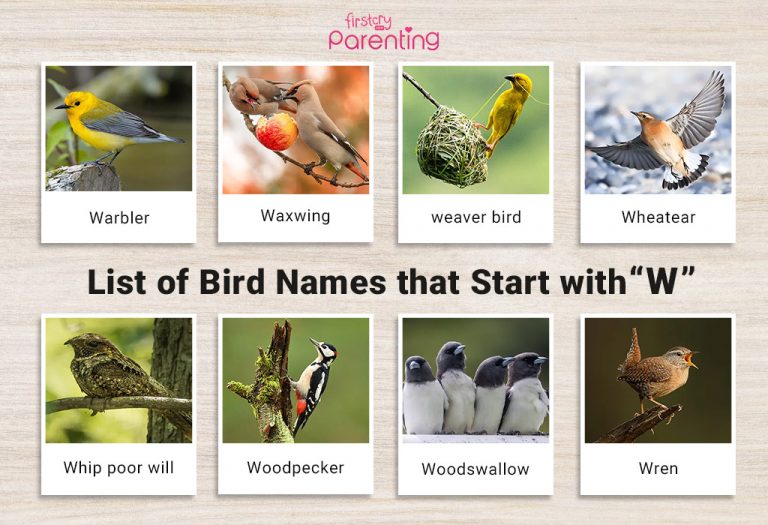
There’s something magical about watching our feathery friends in the skies or perched on tree branches, isn’t there? For many of us, the thrill begins early, when we first learn to identify them by their names. Whether you’re a seasoned birdwatcher, a curious parent, or an eager young learner, it’s always exciting to expand our knowledge. So, let’s dive into the world of bird names that start with the letter W. This list is particularly crafted for preschoolers and kids, making it a delightful addition to their growing vocabulary. After all, who wouldn’t want to boost their kids’ vocabulary with these captivating W letter bird names for preschoolers and kids? Let’s soar into the fascinating world of birds that bear the wonderful letter W!
List Of Common Birds That Start With W
From the whimsical whistle of the Warbler to the waddling walk of the Woodcock, our feathery companions add a layer of wonder to our natural world. As we embark on this journey, you’ll meet various birds beginning with the letter W, each unique in its melody and plumage. This exploration promises to deepen your appreciation for these incredible creatures and the diverse ecosystems they inhabit. So, without further ado, let’s acquaint ourselves with these enchanting bird names with W.
1. Wren
Scientific Name : Troglodytidae
Where Is It Found : Wrens are primarily found in the Americas, with only a few species occurring in Europe and Asia. They are most common in temperate regions.
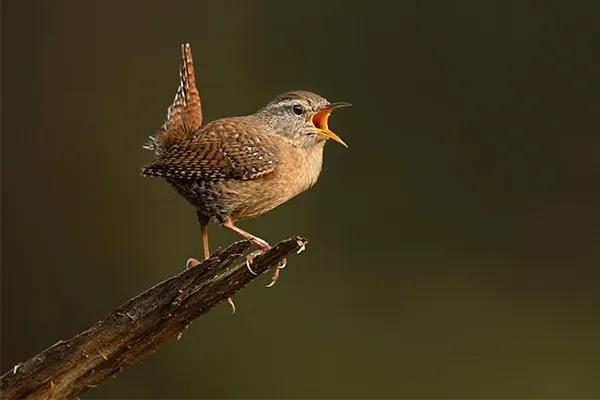
Among the birds beginning with the letter W, the Wren holds a special place with its small, chubby body, often held upright as it busily hops through underbrush and low branches. Its size does not reflect its loud and melodious voice, a delightful contrast that often surprises listeners. Covered primarily in brown feathers, variations depend on the species, with some showcasing lighter undersides or distinctive barrings of darker shades. These birds are not particularly flashy in color but they more than make up for it with their vibrant personalities. They are known to be extremely active, not staying in one place for too long, which makes spotting them a fun challenge for birdwatchers.
Interesting Facts :
- Wrens have a unique behavior called “anting” where they rub ants on their feathers! The reason? It’s believed the ants’ acid helps with mite control.
- Despite their small size, wrens have one of the loudest songs per unit of body weight.
2. Waxwing
Scientific Name : Bombycillidae
Where Is It Found : Waxwings are inhabitants of the Northern Hemisphere, living in open wooded areas in North America and Eurasia.
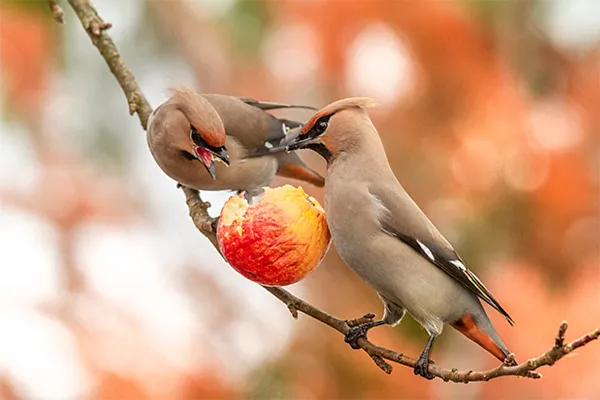
The Waxwing is a treat for the eyes, especially for someone exploring bird names with W. It boasts a sleek, polished look with a crest that sweeps backwards from its head. The overall coloration is a smooth blend of brown and grey, complemented by bright yellow and red spots on the wings and tail, resembling sealing wax, hence the name. These sociable birds are often spotted in large, noisy groups in winter, feasting on berries in trees. They exhibit a rare behavior known as “irruption,” where they migrate unpredictably depending on the food source availability.
Interesting Facts :
- Waxwings practice a charming trait called “courtship feeding,” where males offer berries to females, strengthening their bond.
- They can survive on a fruit-only diet for several months, a rare ability in the bird world.
3. Woodpecker

Scientific Name : Picidae
Where Is It Found : Woodpeckers can be found worldwide, except for Australia, New Zealand, Madagascar, and the extreme polar regions.
Instantly recognizable by their unique pecking behavior, woodpeckers are a favorite among birds that begin with the letter W. With sharp beaks designed to drill into wood, they search for insects or establish nesting holes. They possess strong, stiff tail feathers acting as a prop when they cling vertically to trees. Their plumage varies greatly between species but often includes a blend of black, white, red, and green. Their zygodactyl feet – two toes pointing forward and two backward – give them a firm grip, ideal for their tree-climbing lifestyle.
Interesting Facts :
- Woodpeckers can peck up to 20 times per second!
- They have a special bone, acting as a shock absorber, to prevent brain injuries during their vigorous pecking.
4. Warbler
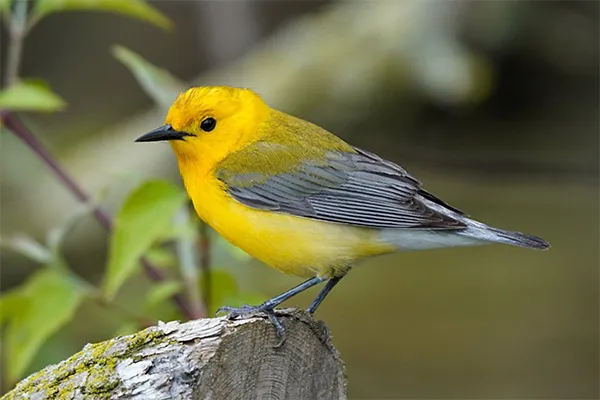
Scientific Name : Sylviidae
Where Is It Found : Warblers inhabit various regions, with many species residing in North America, Europe, and Asia, often preferring wooded areas.
Warblers are small, active songbirds known for their melodious tunes. Typically brightly colored, their plumage ranges from yellows and greens to blues and grays. Due to their vivacious nature and frequent movement, they can sometimes be challenging to spot. However, their distinctive songs often give away their presence. Warblers play a vital role in controlling insect populations, as they primarily feed on caterpillars and other small insects.
Interesting Facts :
- The migration journey of some warbler species can be over 2,500 miles.
- The Blackburnian Warbler nests as high as 80 feet off the ground, making it one of the tree canopy’s highest nesters.
5. Weaver
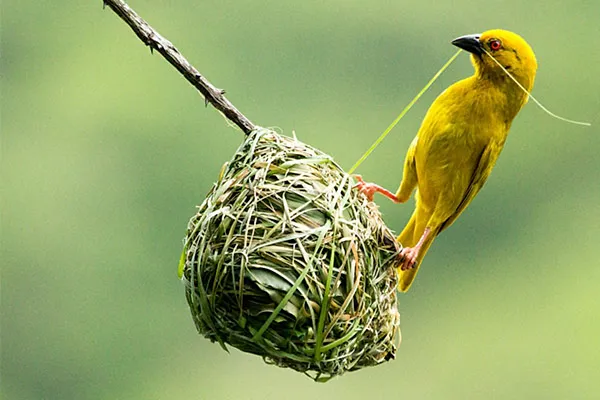
Scientific Name : Ploceidae
Where Is It Found : Weavers predominantly reside in sub-Saharan Africa, but some species can also be found in tropical Asia.
The weaver, as the name suggests, is renowned for its incredible nest-building capabilities. They weave intricate nests, often hanging from tree branches like decorative ornaments. Their bright yellow or red plumage is a sight to behold, making them stand out in their native habitats. Characterized by their conical bills and rounded heads, weavers often have a social nature, living in colonies and frequently communicating with loud calls.
Interesting Facts :
- The weaver’s nest is so tightly woven that it can often hold water.
- Male weavers are the primary architects of these nests, using them as a display to attract potential mates.
6. Waterfowl
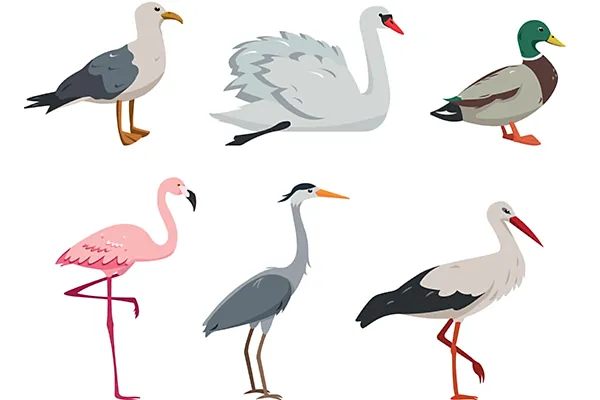
Scientific Name : Anseriformes
Where Is It Found : Waterfowl are found globally, from freshwater lakes and ponds to marshes and coastal shores. They are especially abundant in wetlands.
Waterfowl is a general term for birds like ducks, geese, and swans. These birds are well adapted to aquatic lives. With webbed feet for efficient swimming and waterproof feathers, they’re built for life on the water. Their buoyant bodies and broad flat beaks are perfect for dabbling and diving, often seen tipping forward in the water to graze on underwater vegetation. Many species exhibit vibrant and intricate plumage patterns, especially during mating seasons, making them a favorite among birdwatchers and photographers.
Interesting Facts :
- The term “waterfowl” is often used interchangeably with “wildfowl” in the UK.
- Many waterfowl species practice migratory patterns, with some traveling thousands of miles between breeding and wintering grounds.
7. Whip-poor-will
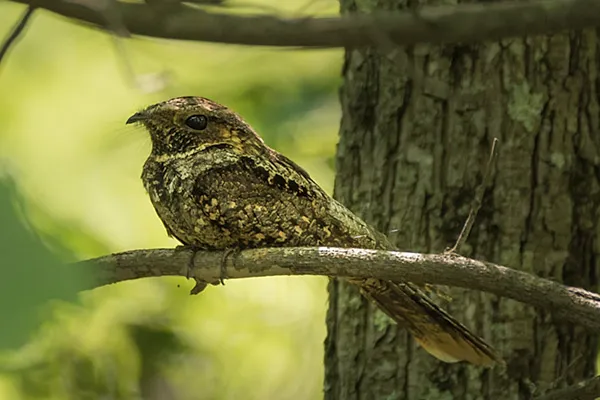
Scientific Name : Antrostomus vociferus
Where Is It Found : The Whip-poor-will can be found in the Eastern and Central parts of North America, favoring woodlands and open forests.
The Whip-poor-will, named for its continuous “whip-poor-will” call during spring evenings, is a nocturnal bird known for its cryptic appearance. Its mottled gray and brown plumage blends seamlessly with leaf litters, making it challenging to spot during the daytime. With large eyes adapted for low light and a wide mouth, the Whip-poor-will primarily feeds on moths and other flying insects at night.
Interesting Facts :
- Unlike many birds, the Whip-poor-will’s song can be heard during moonlit nights, often for hours without a break.
- Their eggs are timed to hatch around the full moon, which ensures maximum light for the parents to hunt insects and feed their chicks.
8. Woodswallow
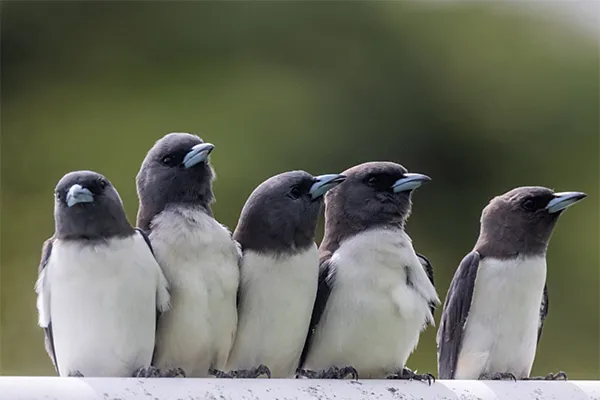
Scientific Name : Artamus
Where Is It Found : Woodswallows inhabit Australia, the islands of Southeast Asia, and parts of the Indian subcontinent.
Woodswallows are sleek, agile birds with a swallow-like appearance, although they aren’t closely related to true swallows. Their plumage can range from soft grays and blues to inky blacks, often with iridescent sheens. They have short, strong bills and are aerial feeders, capturing insects on the wing with impressive acrobatics. A unique behavior observed among Woodswallows is their communal roosting. They huddle closely, often in large numbers, to share warmth during cooler temperatures.
Interesting Facts :
- Woodswallows are known to use their wings to “shade” their chicks from direct sunlight, showcasing parental care.
- They possess a special brush-tipped tongue, which aids in feeding on nectar from flowers, although insects remain their primary food source.
9. Wheatear
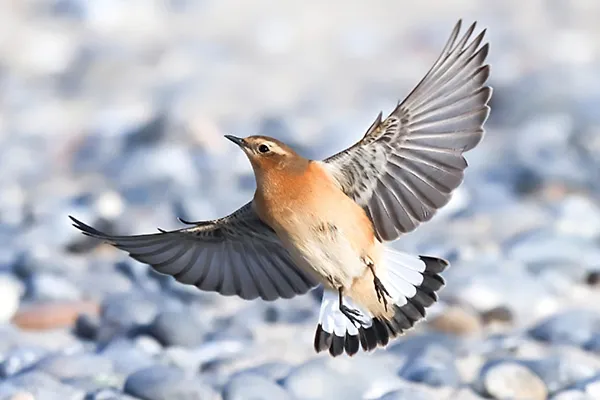
Scientific Name : Oenanthe
Where Is It Found : Wheatears are often found across Europe, Asia, Africa, and North America, usually in open and stony habitats.
The Wheatear is a small, elegant bird, recognized by its striking plumage featuring bright white underparts and contrasting dark uppers, often with patches of blue-gray or rust. The name “Wheatear” is not related to wheat or ears but is derived from the Old English word for “white arse”, referring to its white rump. These birds are ground dwellers, often seen hopping or running across open fields in search of insects.
Interesting Facts :
- Wheatears have one of the longest migratory journeys of any songbird, with some traveling from Arctic breeding grounds to winter in Africa.
- They are among the first migrants to arrive in their breeding areas in the spring, signaling the start of the new season for many bird enthusiasts.
10. White-eye
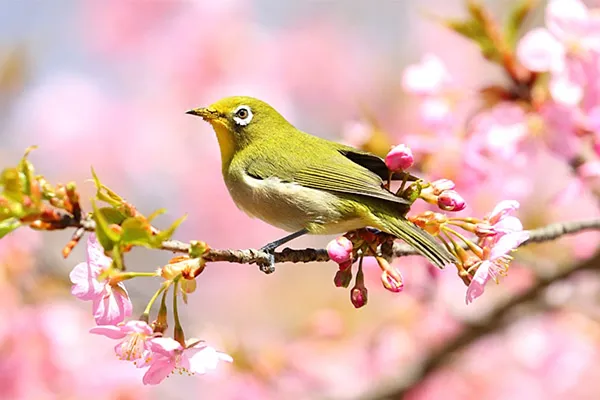
Scientific Name : Zosteropidae
Where Is It Found : White-eyes are predominantly found in tropical and subtropical regions of Asia, Australia, the Indian Ocean, and the Pacific islands.
White-eyes are small, delicate birds with an unmistakable feature: a conspicuous white ring around their eyes. Their plumage is mostly green or olive-green, making them blend effortlessly into the lush environments they inhabit. They have slender bills and a sweet, melodic song, which often fills tropical forests and gardens. Often seen in lively flocks, White-eyes are social birds, constantly on the move, flitting from branch to branch in search of insects and nectar.
Interesting Facts :
- White-eyes have an exceptional ability to colonize islands, leading to a rapid speciation in isolated environments.
- They play a crucial role in plant pollination in many ecosystems due to their nectar-feeding habits.
11. Wood-Pigeon
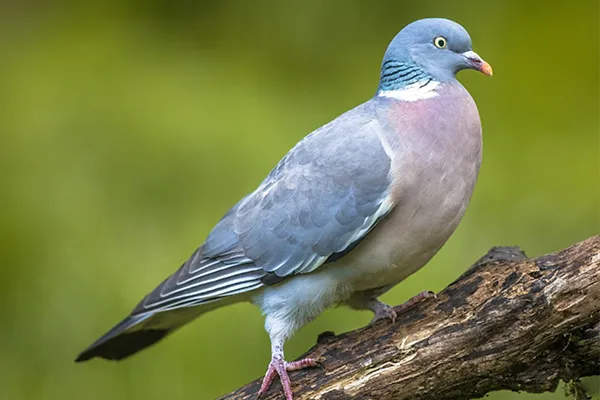
Scientific Name : Columba palumbus
Where Is It Found : Wood-Pigeons are commonly found across Europe and parts of Asia. They prefer woodlands, parks, gardens, and farmlands.
Considerably larger than city pigeons, the Wood-Pigeon flaunts a gray-blue plumage with a distinctive white patch on its neck. The wings exhibit a greenish and purplish sheen, especially noticeable when they catch sunlight. With a steady and rhythmic wingbeat, they are often seen flying across open spaces or perched prominently on trees or buildings. They feed primarily on seeds, grains, and crops, sometimes becoming a nuisance for farmers.
Interesting Facts :
- Wood-Pigeons can drink water without needing to tilt their heads back, a trait not common in many birds.
- Their cooing calls are a familiar sound in many rural areas, marking the beginning and end of days during warmer months.
12. White-tailed Tropicbird
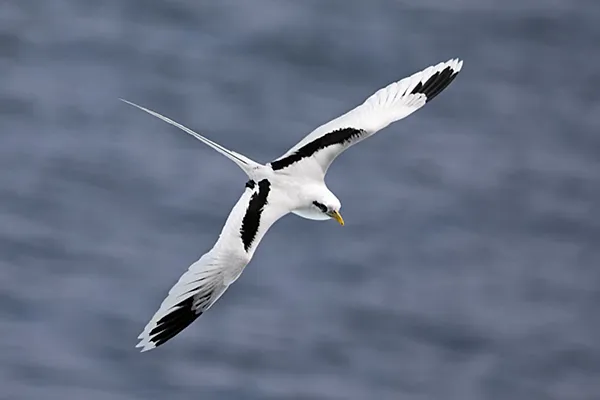
Scientific Name : Phaethon lepturus
Where Is It Found : White-tailed Tropicbirds are residents of the tropical oceans, breeding on islands in the Atlantic, Indian, and Pacific Oceans.
Elegant and graceful, the White-tailed Tropicbird is predominantly white with black markings on its wings and a black eye-line. Its most distinguishing feature is the long white tail streamers or “aerials”. While they are oceanic birds, they are more often seen flying near coastlines than far out at sea. Their diet consists mainly of fish and squid, which they catch by performing plunge-dives from notable heights.
Interesting Facts :
- The White-tailed Tropicbird’s aerial displays during the breeding season are mesmerizing, involving rapid circling, steep ascents, and sharp turns.
- Despite their affinity for the ocean, they are not great swimmers and spend most of their time airborne or perched.
13. Waxwing
Scientific Name : Bombycillidae
Where Is It Found : Waxwings inhabit the temperate regions of North America and Eurasia, particularly in places with abundant fruit trees during non-breeding seasons.
The Waxwing is a medium-sized, sleek bird with a unique crest atop its head. Their plumage is a soft blend of browns and grays, accented by brilliant red tips on some wing feathers, which look like sealing wax – hence their name. Their diet primarily consists of berries and they are known to eat large quantities when food is abundant. With a smooth flight and sociable behavior, Waxwings often travel in large flocks, especially during the winter months when they scour for berry-rich areas.
Interesting Facts :
- Waxwings have been observed passing berries to one another, beak to beak, in a line until one decides to eat it.
- They can ferment in their stomachs if consumed in vast amounts, occasionally intoxicating the birds.
14. Wattled Crane
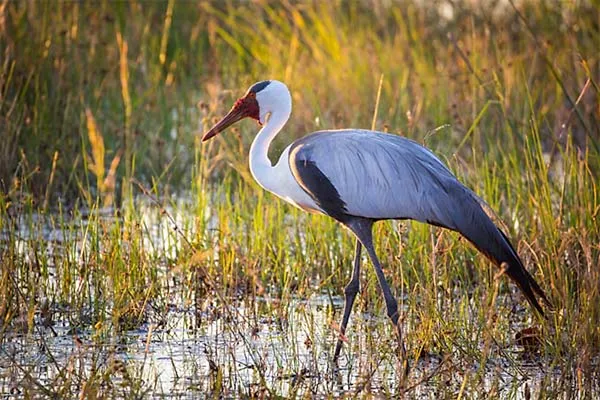
Scientific Name : Bugeranus carunculatus
Where Is It Found : The Wattled Crane is found in the wetlands of sub-Saharan Africa, especially in regions from Zambia to South Africa.
The tallest crane species in Africa, the Wattled Crane stands out due to the white, fleshy wattles hanging from its throat. Their primary feathers are black, contrasting sharply with the rest of their grey and white body. A unique feature is their long legs, which allow them to wade through deep waters searching for tubers, aquatic plants, and small vertebrates.
Interesting Facts :
- Wattled Cranes perform a spectacular, synchronized dancing ritual during courtship, which includes leaping, bowing, and tossing plant materials into the air.
- They are the most vulnerable of Africa’s crane species, facing threats from habitat loss due to agriculture and human development.
15. Wandering Albatross
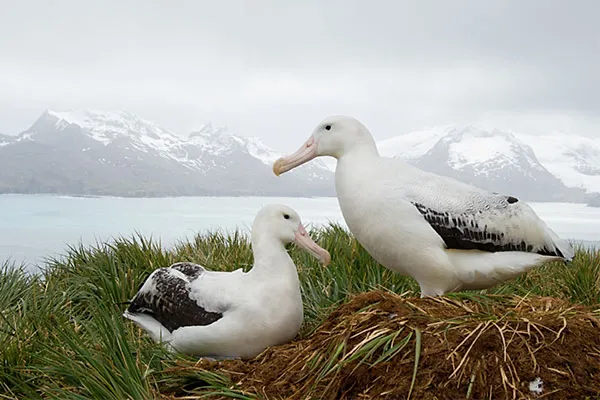
Scientific Name : Diomedea exulans
Where Is It Found : The Wandering Albatross is found across the Southern Ocean, particularly around the Antarctic region. They spend most of their life soaring over open waters.
Recognized by its impressive wingspan, which can exceed 11 feet, making it the largest of any living bird, the Wandering Albatross is truly a sight to behold. Their body is mostly white, with dark wingtips and a pink bill. Adapted to a life at sea, these birds can glide effortlessly over the ocean for hours or even days without flapping their wings, riding the air currents and conserving energy. Their diet mainly comprises squid, fish, and other sea creatures, which they snatch from the water’s surface.
Interesting Facts :
- The Wandering Albatross has a lifespan that can exceed 60 years, making them one of the longest-living birds.
- They can cover vast distances during their foraging trips, sometimes traveling thousands of miles away from their nesting sites.
Other Birds Beginning With W
Birds are as diverse and fascinating as the cultures that admire them. Among this plethora of species, a significant number of bird starts with the letter “w”. In this section, we will explore some of these captivating avian creatures, diving into their habitats, behaviors, and unique characteristics.
- Wagtail
- Wallcreeper
- Warbler
- Waterhen
- Waterthrush
- Wattled Guan
- Wattled Jacana
- Wattled Starling
- Waxbill
- Weaver
- Weebill
- Whimbrel
- Whinchat
- Whipbird
- Whiskered Auklet
- Whiskered Tern
- White-crowned Sparrow
- White-eyed Vireo
- White-faced Ibis
- White-faced Plover
- White-fronted Bee-eater
- Whitehead
- White-naped Crane
- White-necked Jacobin
- White-throated Kingfisher
- White-winged Crossbill
- White-winged Dove
- White-winged Snowfinch
- Willow Ptarmigan
- Willow Warbler
- Wilson’s Phalarope
- Wilson’s Snipe
- Wilson’s Storm-petrel
- Wilson’s Warbler
- Wing-snapping Cisticola
- Winter Wren
- Wompoo Fruit Dove
- Wood Sandpiper
- Wood Stork
- Woodchat Shrike
- Woodcock
- Woodlark
- Woodswallow
- Woolly-necked Stork
- Worm-eating Warbler
- Wrentit
- Wryneck
- Wrybill
Bird enthusiasts, nature lovers, and curious minds alike can further explore these names, diving into the characteristics and habitats that make each of these ‘W’ birds unique in their own right.
FAQs
1. How many bird species have names that start with the letter ‘W’?
There are over a hundred bird species globally with names starting with the letter ‘W’, though the exact number might vary based on classification and regional differences.
2. Which ‘W’ bird has the largest wingspan?
The Wandering Albatross boasts the largest wingspan of any living bird, which can exceed 11 feet.
3. Are there any ‘W’ birds that are considered endangered?
Yes, several ‘W’ birds are considered endangered or vulnerable, including the Wattled Crane, which faces threats from habitat loss.
4. Which continents can you find ‘W’ birds?
Birds with names starting with the letter ‘W’ can be found on every continent, from the Wandering Albatross in the Antarctic to the Wood Warbler in Europe.
5. Are Warblers and Waterthrushes the same?
No, while both are songbirds, warblers encompass a wide variety of species with varied appearances and habitats. Waterthrushes are a type of warbler but are distinct due to their affinity for waterside habitats.
In the intricate tapestry of nature, birds with names that start with the letter ‘W’ add unique patterns and colors. Their diversity, behaviors, and sheer beauty remind us of the wonders of the avian world and the importance of preserving these feathery marvels for generations to come.
Birds Names That Begin With (A to Z)
Was This Article Helpful?
Parenting is a huge responsibility, for you as a caregiver, but also for us as a parenting content platform. We understand that and take our responsibility of creating credible content seriously. FirstCry Parenting articles are written and published only after extensive research using factually sound references to deliver quality content that is accurate, validated by experts, and completely reliable. To understand how we go about creating content that is credible, read our editorial policy here.
- Author