
List of Birds That Start With O




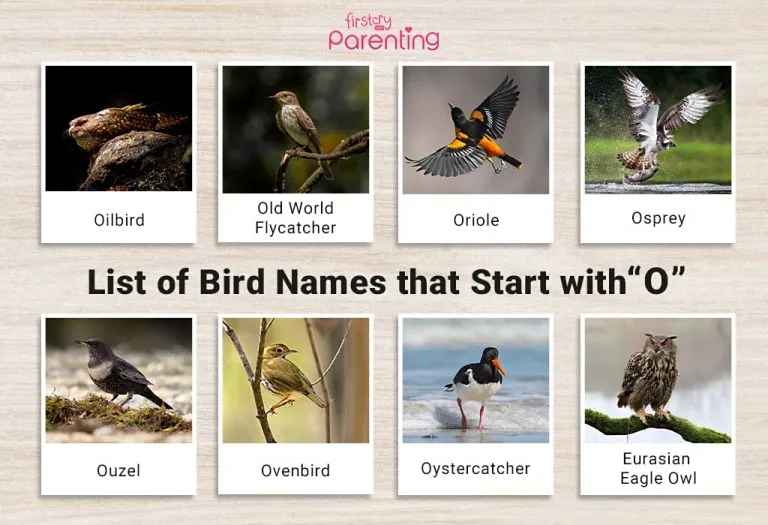
There’s a certain charm to the world of ornithology, especially when we dive deep into the myriad of bird names that start with specific letters. Perhaps you’ve landed here driven by curiosity, or maybe you’re a parent or educator seeking o letter bird names for preschoolers and kids. Enhancing kids’ vocabulary with the intriguing names of our feathery friends not only aids in their educational journey but also fosters a budding love for nature. Our compilation is tailored just for that – a list of bird names that start with the letter O. It’s delightful, informative, and is sure to add a fun twist to the learning experience.
List of Common Birds That Start With O
The majesty and intrigue of our avian companions are boundless. Birds beginning with the letter O are particularly captivating. From vibrant colors to unique habits, each bird name with O has a story. Dive into this fascinating list to acquaint yourself with these wonders.
1. Oriole
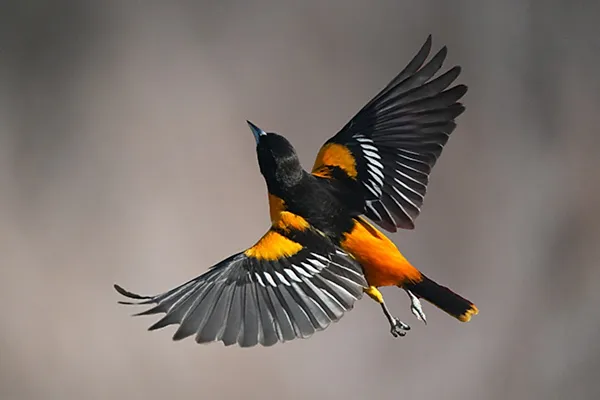
Scientific Name: Icterus spp.
Where Is It Found: Primarily in North America, Central America, and parts of South America.
Orioles are medium-sized songbirds known for their strikingly bright and contrasting colors, most commonly shades of orange or yellow and black. They are slender with slightly curved beaks, ideal for feeding on nectar, fruit, and insects. Depending on the species, the color patterns may vary, but their melodious songs remain a consistent identifier.
Interesting Facts:
- Orioles are incredibly talented weavers, often crafting hanging nests that resemble pouches.
- Their fondness for sweet nectar has earned them a reputation as “backyard hummingbirds”.
2. Osprey
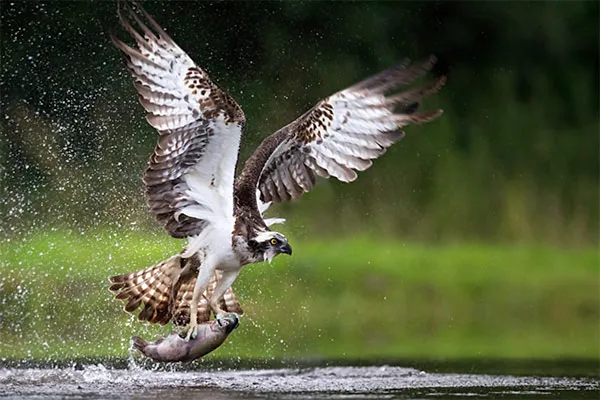
Scientific Name: Pandion haliaetus
Where Is It Found: Worldwide, near freshwater lakes and rivers.
The osprey is a large raptor, known primarily for its fish-eating habits. It possesses a unique toe arrangement – three toes forward and one backward – allowing for a better grip on slippery fish. With a white belly, brown back and wings, and a distinctive mask around its yellow eyes, ospreys are easily identifiable.
Interesting Facts:
- Ospreys have a special outer layer in their eyes which allows them to see fish underwater without the glare.
- They can also close their nostrils when diving!
3. Oystercatcher
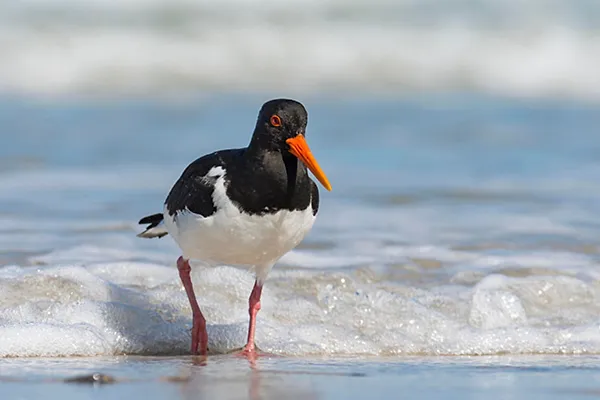
Scientific Name: Haematopus spp.
Where Is It Found: Coastal areas worldwide.
Oystercatchers are recognizable by their long, bright red or orange bills and their striking black and white bodies. Their name derives from their diet of shellfish. Using their robust bills, they pry open mollusks.
Interesting Facts:
- Despite their name, oysters aren’t the primary diet of all oystercatcher species.
- Their feeding habits vary based on their habitat.
4. Owl
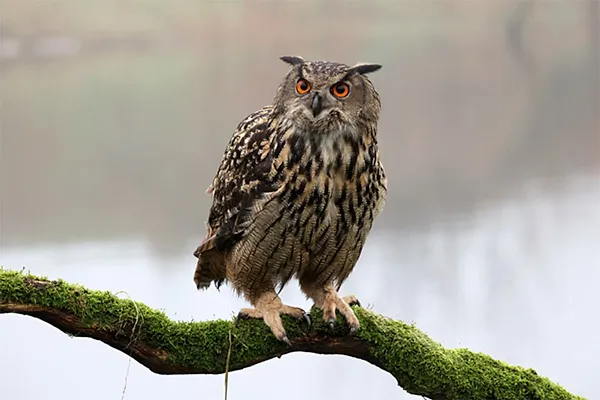
Scientific Name: Strigidae and Tytonidae families
Where Is It Found: Almost everywhere in the world, from urban areas to dense forests.
Owls are nocturnal birds known for their round faces, large eyes, and silent flight. Their size varies from the tiny elf owl to the large Eurasian eagle owl. Their muted feathers allow them to blend in with their surroundings.
Interesting Facts:
- Owls have a flexible neck that lets them turn their heads up to 270 degrees.
- Their asymmetrically placed ears allow them to pinpoint the location of sounds with incredible accuracy.
Also Read: Interesting Owls Facts for Kids
5. Ouzel (Also known as Dipper)
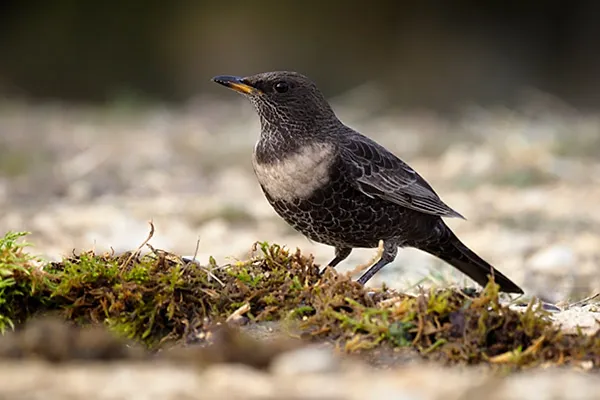
Scientific Name: Cinclus spp.
Where Is It Found: Streamside settings in Europe, Asia, and the Americas.
The ouzel or dipper is a unique songbird that has the distinctive capability to walk underwater on streambeds. They’re usually dark in color, often with some white markings. Their short wings give them a distinctive rapid flight, and they can often be seen bobbing on river stones.
Interesting Facts:
- Dippers have an extra eyelid, known as a nictitating membrane, that helps them see underwater.
- Their nostrils also have flaps to prevent water from entering.
6. Ovenbird
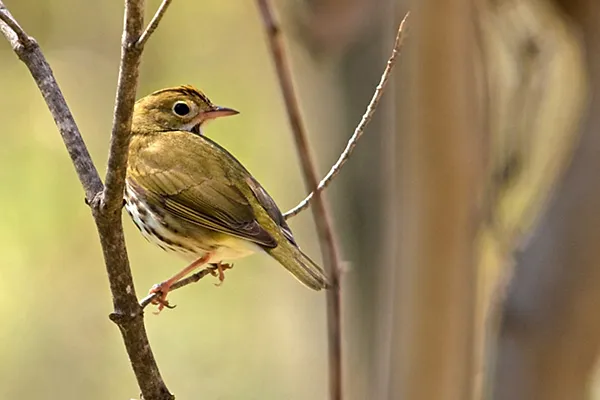
Scientific Name: Seiurus aurocapilla
Where Is It Found: Forests across North America.
Ovenbirds are a part of the warbler family. They are small, olive-brown birds with a streaked breast and an orange crown bordered by dark stripes. Their name is derived from their unique domed nest, which looks somewhat like a Dutch oven.
Interesting Facts:
- The ovenbird’s loud song, often translated as “teacher, teacher, teacher”, is a common sound in eastern forests in the summertime.
7. Old World Flycatcher
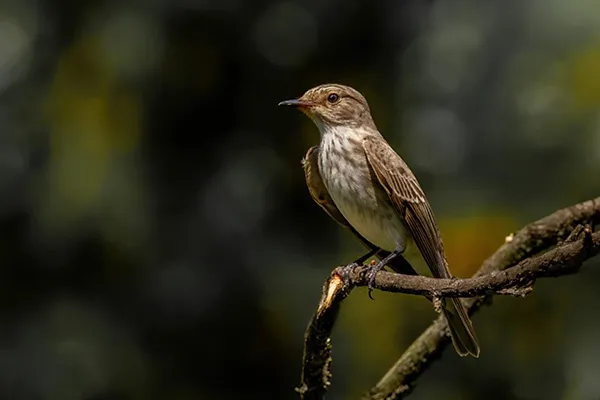
Scientific Name: Muscicapidae family
Where Is It Found: Europe, Africa, Asia, and the surrounding islands.
The Old World flycatchers vary in color, but many have intricate patterns with browns and whites. They are typically small birds with strong, yet short bills, which are well adapted to their insectivorous diets.
Interesting Facts:
- Despite their name implying a single species, “Old World Flycatcher” refers to a large family of birds with over 300 different species.
8. Oilbird
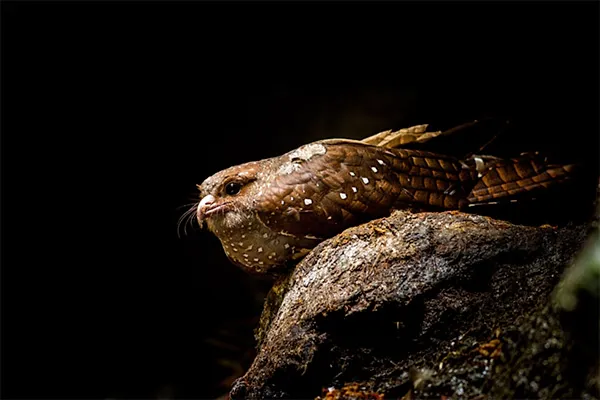
Scientific Name: Steatornis caripensis
Where Is It Found: Caves in parts of South America.
The oilbird is a nocturnal bird with a wingspan of over a meter. It has a strong and hooked beak, reddish-brown plumage, and white spots. Oilbirds are unique as they use echolocation, similar to bats, to navigate in the dark.
Interesting Facts:
- The name “oilbird” is derived from the young birds which are fattened and then rendered down for oil by some indigenous peoples.
9. Olive Warbler
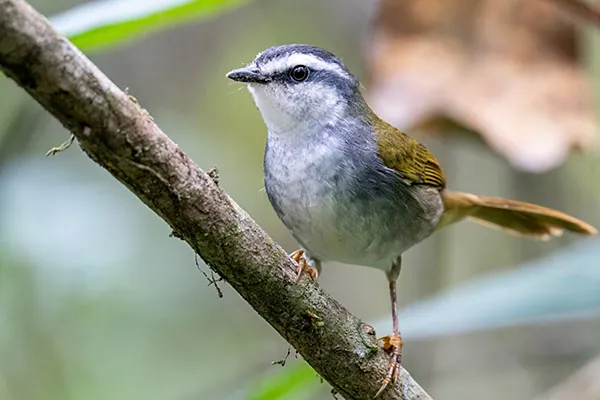
Scientific Name: Peucedramus taeniatus
Where Is It Found: Mountain forests in southwestern North America to central America.
Olive warblers are small birds with a gray body, two white wing bars, and a distinctive orange head in males. Despite their name, they are not true warblers and belong to a family all their own.
Interesting Facts:
- The olive warbler is the only species in its family, Peucedramidae, making it quite unique in the avian world.
10. Oriental Magpie-Robin
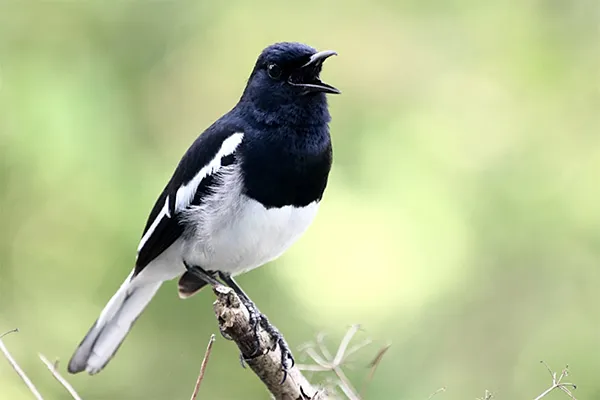
Scientific Name: Copsychus saularis
Where Is It Found: Across the Indian subcontinent and parts of Southeast Asia.
These birds are known for their melodious songs and striking black and white plumage. The males have black upperparts, white underparts, and a black tail with white patches, while the females have more grayish tones.
Interesting Facts:
- The Oriental magpie-robin is a popular cage bird due to its singing ability and is also the national bird of Bangladesh.
11. Oriental Stork
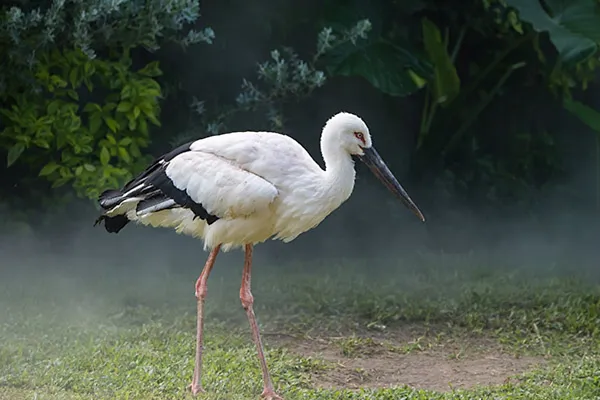
Scientific Name: Ciconia boyciana
Where Is It Found: Wetlands in East Asia, especially China, Russia, and Japan.
The Oriental stork is a large, elegant bird with snow-white feathers, contrasting black wings, and a long, pointed beak. Its legs and the skin around its eyes are a vivid red, giving it a distinguished appearance. The storks use their long beaks to forage in shallow waters for fish, frogs, and insects.
Interesting Facts:
- Unlike its noisy relatives, the Oriental stork does not possess vocal cords and thus communicates primarily through bill-clattering.
12. Ocellated Antbird
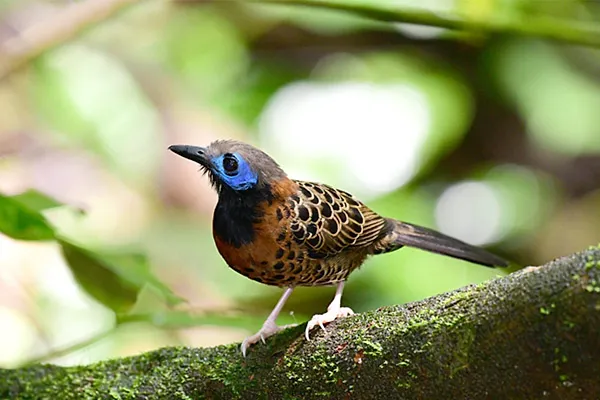
Scientific Name: Phaenostictus mcleannani
Where Is It Found: Tropical rainforests of Central America.
This medium-sized antbird sports intricate patterns of black and white spots and streaks. They are called “antbirds” because they often follow army ant swarms, feeding on the small creatures that are flushed out by the ants.
Interesting Facts:
- Ocellated antbirds are known for their unique behavior of cooperating with other species.
- They often form mixed-species flocks, joining other birds to follow army ants and share the feast.
13. Orange-breasted Sunbird
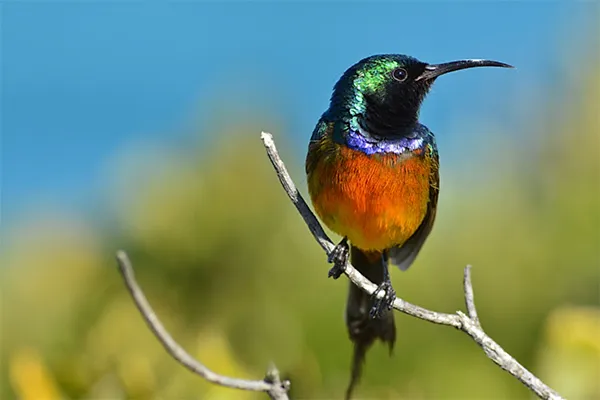
Scientific Name: Anthobaphes violacea
Where Is It Found: Fynbos region of the Western Cape of South Africa.
This vivid sunbird is truly a sight to behold with its iridescent green head, bright orange breast, and deep blue belly. Their slender, curved bills are perfectly suited for sipping nectar from flowers.
Interesting Facts:
- The orange-breasted sunbird is exclusively found in the fynbos biome, a unique shrubland habitat renowned for its incredible plant diversity.
14. Olive-backed Pipit
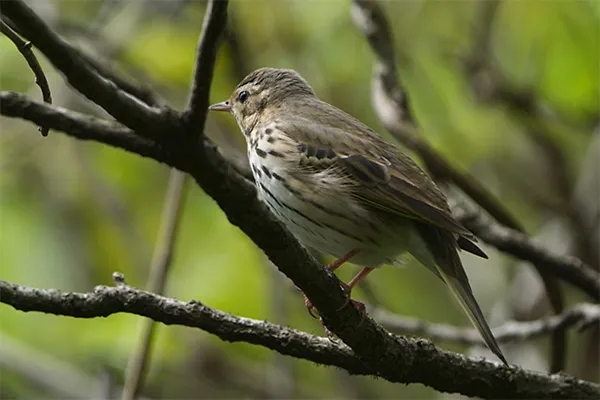
Scientific Name: Anthus hodgsoni
Where Is It Found: Across Asia, and migrates to Southeast Asia and the Indian subcontinent during winter.
This small bird has an olive-green back, streaked underparts, and a thin bill. Their high-pitched songs are often heard before the bird is seen, as they prefer to remain camouflaged in the grass or low shrubs.
Interesting Facts:
- The Olive-backed Pipit’s song varies greatly across regions, suggesting local “dialects” among populations.
15. Olive-throated Parakeet
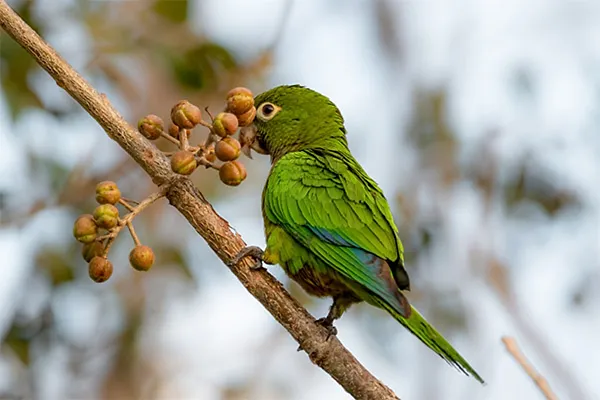
Scientific Name: Eupsittula nana
Where Is It Found: From Mexico to western Panama.
This small parakeet boasts a mostly green plumage with a distinctive olive-colored throat. They are gregarious birds, often seen in flocks, flying rapidly with swift, direct motions.
Interesting Facts:
- Unlike many parakeets that feed primarily on seeds, the Olive-throated Parakeet has a varied diet and can often be spotted foraging for fruits, berries, and even insects.
16. Olive Sparrow
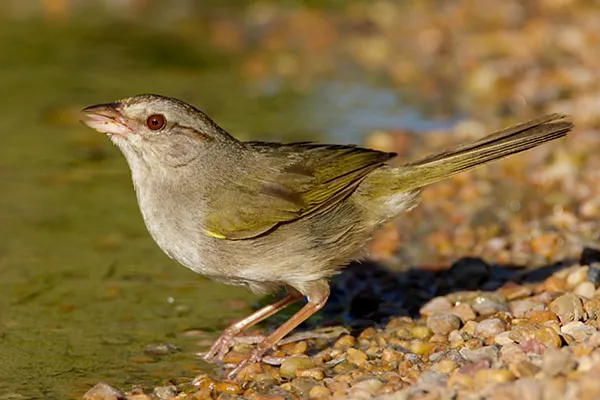
Scientific Name: Arremonops rufivirgatus
Where Is It Found: Southern Texas in the USA to Central America.
As its name suggests, the Olive Sparrow possesses an olive-brown upper body. This small bird is further characterized by its rich rufous crown and a striking white eyebrow stripe. Its song is a series of melodic chirps, making it a lovely serenader of its habitat.
Interesting Facts:
- Despite being named a sparrow, the Olive Sparrow isn’t closely related to the sparrows of North America but is actually more closely linked to the towhees.
17. Ochre-breasted Antpitta
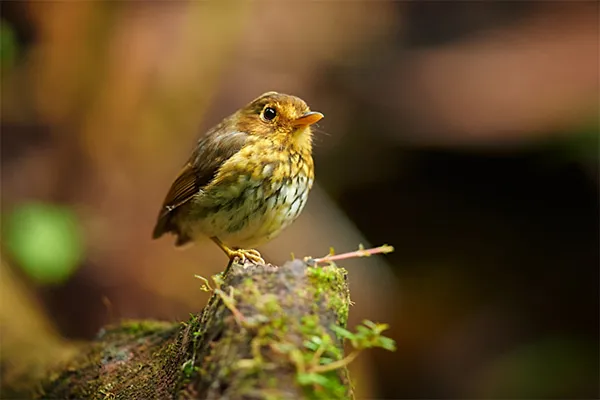
Scientific Name: Grallaricula flavirostris
Where Is It Found: Andean forests in South America.
This bird is petite, plump, and secretive. With an ochre-colored breast, grayish-brown upperparts, and a unique facial pattern, it scurries about the forest floor searching for insects and other small prey.
Interesting Facts:
- Antpittas, including the Ochre-breasted variety, are known for their elusive nature.
- Birdwatchers consider spotting one a genuine treat and a testament to their patience.
18. Orange-fronted Barbet
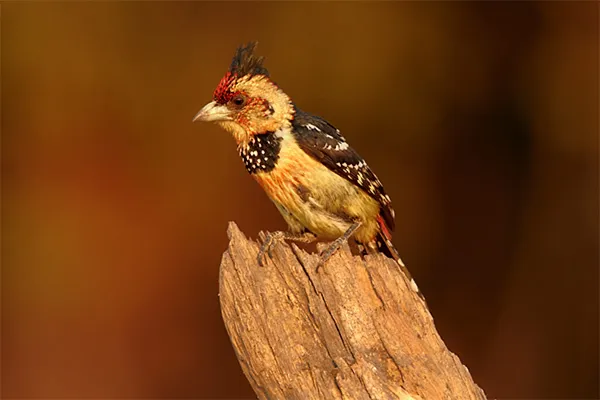
Scientific Name: Capito squamatus
Where Is It Found: Pacific lowlands of Nicaragua and Costa Rica.
This medium-sized barbet is adorned with an impressive combination of orange, black, white, and yellow. The male is particularly vibrant, with an orange forehead and throat, a feature from which its name is derived.
Interesting Facts:
- The Orange-fronted Barbet’s diet mainly consists of fruit, making them vital seed dispersers in their native habitats.
19. Osprey Kingfisher
Scientific Name: Todiramphus sanctus
Where Is It Found: Coastal islands of Northern Australia and New Guinea.
Despite its name, the Osprey Kingfisher is not closely related to ospreys. It’s a compact, vividly blue and white bird with a stout bill. Kingfishers, including this species, are often found near water bodies and are expert fish catchers.
Interesting Facts:
- The Osprey Kingfisher has an interesting call that sounds much like a dog’s bark, leading to its other common name, the “Barking Kingfisher.”
20. Olive-crowned Yellowthroat
Scientific Name: Geothlypis semiflava
Where Is It Found: Highland wetlands from Guatemala to northern Nicaragua.
This small bird displays an olive-green crown, which contrasts beautifully with its yellow underparts. Males have a black mask which makes them easily distinguishable from the females.
Interesting Facts:
- The Olive-crowned Yellowthroat often builds its nest close to the ground or water, making it a dome-shaped structure with a side entrance.
Other Birds Beginning With O
While we’ve delved deep into some fascinating details about specific birds that start with the letter O, there’s still a vast world of avian wonders to uncover. The sheer diversity in the avian realm ensures that every bird starts with letter O has its own unique tale. Here, we’ve listed several more ‘O’ birds, each a testament to nature’s incredible diversity.
- Oahu Amakihi
- Oahu Elepaio
- Oak Titmouse
- Oaxaca Sparrow
- Oberholser’s Fruit Dove
- Obi Woodcock
- Oceanic Flycatcher
- Ochre-bellied Flycatcher
- Ochre-breasted Tanager
- Ochre-cheeked Spinetail
- Ochre-collared Monarch
- Ochre-marked Parakeet
- Ochre-rumped Bunting
- Ochre-striped Antpitta
- Ochraceous Attila
- Ochraceous Pewee
- Ochraceous Wren
- Ochre-breasted Brushfinch
- Ochre-faced Tody-Flycatcher
- Ochre-lored Flatbill
- Ochre-winged Trumpeter
- Okinawa Rail
- Olrog’s Gull
- Olson’s Petrel
- Olive-backed Euphonia
- Olive-backed Quail-Dove
- Olive-capped Warbler
- Olive-chested Flycatcher
- Olive-faced Flatbill
- Olive-flanked Whistler
- Olive-gray Tody-Flycatcher
- Olive-headed Lorikeet
- Olive-legged Seriema
- Olive-spotted Hummingbird
- Olive-striped Flycatcher
- Olive-tailed Parrotlet
- Olive-tree Warbler
- Olive-whiskered Bulbul
- Olive-winged Bulbul
- Olive-yellow Tanager
- Olivaceous Cormorant
- Olivaceous Flatbill
- Olivaceous Greenlet
- Olivaceous Piculet
- Olivaceous Siskin
- Olivaceous Warbler
- Olivaceous Woodcreeper
- Olivaceous-backed Woodpecker
- Olivary Flycatcher
This extensive list represents only a fraction of the bird species starting with the letter O. Each name is a gateway to a unique world, promising tales of habitats, behaviors, and evolution.
FAQs
1. Are All Birds with Names Starting with ‘O’ Found in the Same Region?
No, birds that have names starting with ‘O’ can be found all over the world, each adapted to its specific region and habitat.
2. How Can I Attract More ‘O’ Birds to My Backyard?
To attract more ‘O’ birds, or any birds for that matter, provide diverse native plants, fresh water sources, and bird feeders with a variety of seeds suitable for local bird species.
3. Why are Some ‘O’ Birds Rare to Spot?
Some ‘O’ birds are elusive due to their specific habitats, migratory patterns, nocturnal behaviors, or simply because they exist in smaller numbers due to environmental threats or natural rarity.
The vast realm of avian species, especially those starting with the letter ‘O’, showcases nature’s incredible diversity and adaptability. From the dense forests of Central Africa to the coastal islands of Australia, each bird narrates a tale of evolution, survival, and beauty. As we venture into the world of these feathery wonders, it’s a reminder of the intricate tapestry of life that surrounds us and the importance of cherishing and preserving it for future generations.
Birds Names That Begin With (A to Z)
Was This Article Helpful?
Parenting is a huge responsibility, for you as a caregiver, but also for us as a parenting content platform. We understand that and take our responsibility of creating credible content seriously. FirstCry Parenting articles are written and published only after extensive research using factually sound references to deliver quality content that is accurate, validated by experts, and completely reliable. To understand how we go about creating content that is credible, read our editorial policy here.
- Author