

List of Birds That Start With M




Our editorial process ensures that the information we provide is well-researched and reliable. Learn more about our approach in the FirstCry Parenting editorial policy.
There’s a certain allure to the avian world, an enchantment that draws our eyes to the sky every time a bird takes flight. For many of us, our interest began in childhood, flipping through colorful picture books or being inquisitive about the chirping sounds from our backyards. You might be a parent, teacher, or simply an enthusiastic bird lover wanting to boost kids’ vocabulary. This is the perfect place for you. This article has been specially curated to present bird names that start with the letter M. Not just any names, but M letter bird names for preschoolers and kids. As we venture on this feathery journey, let’s expand our kids’ vocabulary and our own, one bird at a time.
List of Common Birds That Start With M
Bird-watching is a captivating activity that lets us appreciate the diverse world of birds around us. Dive into this list of common birds beginning with the letter M. Whether you’re a seasoned birder or introducing young minds to the beauty of the avian kingdom, this guide has got you covered.
1. Magpie
Scientific Name: Pica pica
Where Is It Found: North America, Europe, and Asia
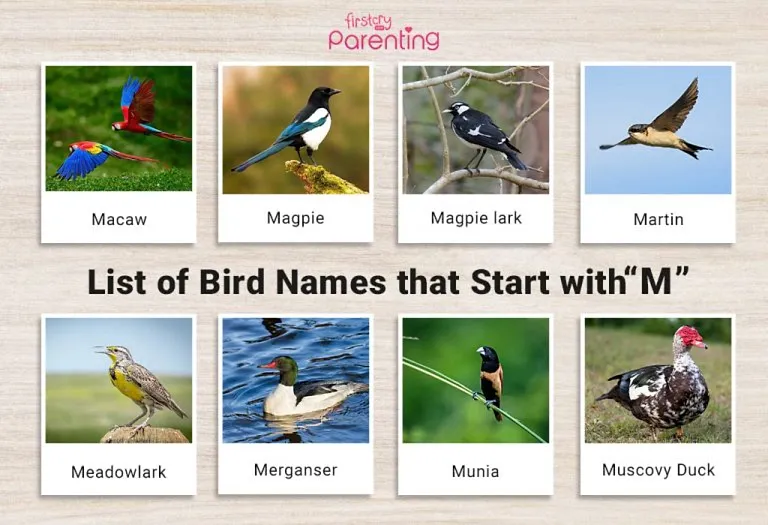
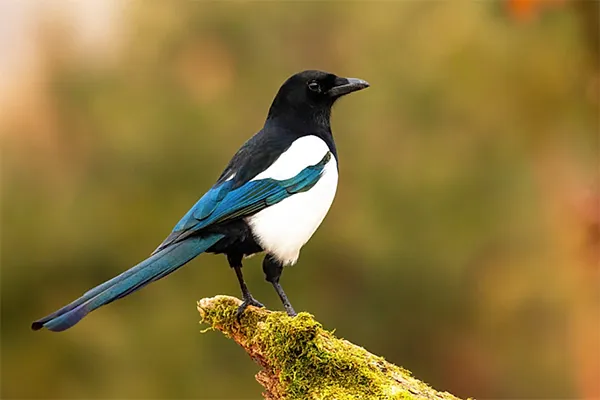
The magpie is a striking bird with contrasting black and white plumage. They have long tails and a chatty nature. The shimmering green and blue tints on their black feathers are especially noticeable under direct sunlight.
Interesting Facts
- Magpies are considered one of the most intelligent birds and have demonstrated self-recognition in mirror tests.
- Despite myths suggesting otherwise, research shows magpies aren’t necessarily attracted to shiny objects.
- They can form strong social bonds, often seen moving in pairs or small groups.
2. Macaw
Scientific Name: Ara macao
Where Is It Found: Central and South America
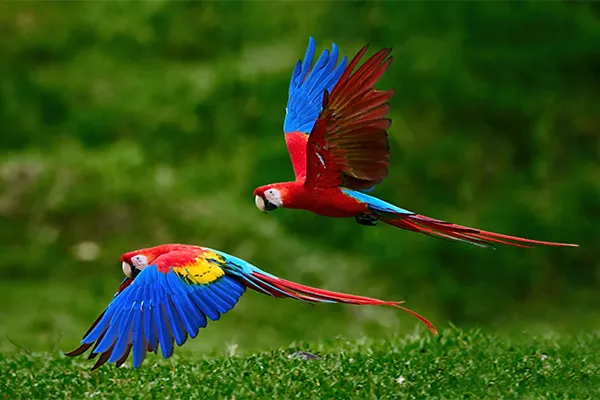
Macaws are vibrant, large parrots boasting a rainbow of colors. With their powerful beaks, they can crack hard nuts and seeds. Their loud calls, squawks, and playful nature make them unmistakable in the wild and popular in captivity.
Interesting Facts
- Macaws have a long lifespan and can live up to 60 years in the wild and even longer in captivity.
- They mate for life, showcasing strong bonds with their partners.
- Their facial feather pattern is unique, much like human fingerprints.
3. Meadowlark
Scientific Name: Sturnella magna
Where Is It Found: North and South America
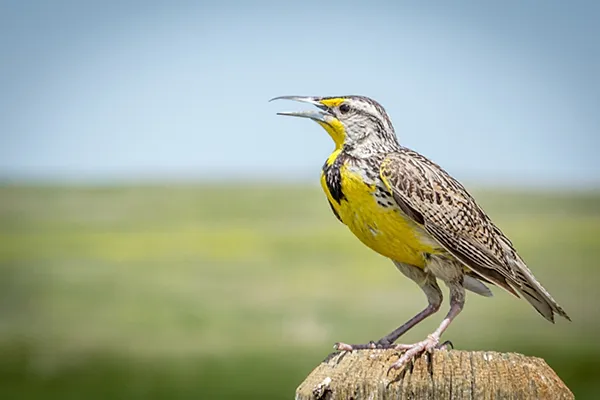
Meadowlarks are songbirds with a bright yellow chest and a distinctive black V-neck pattern. They prefer grasslands and open fields where their melodious songs can be heard during the spring and summer months.
Interesting Facts
- There are two main species of meadowlark: the Eastern and Western Meadowlark. They look quite similar, but their songs are different.
- Meadowlarks’ diet mainly consists of insects, which they capture by walking and running on the ground.
- They’re not actually larks; their name is a bit misleading. They are part of the Blackbird family.
4. Merganser
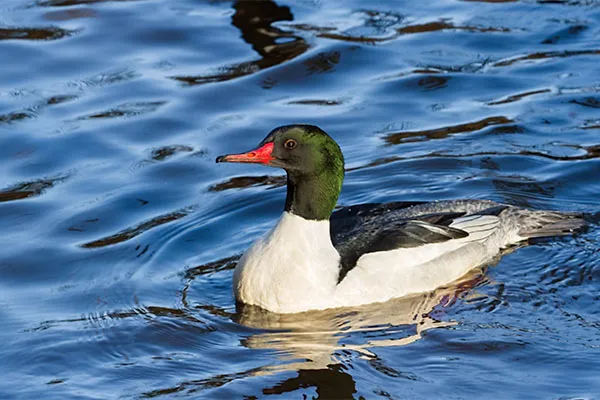
Scientific Name: Mergus merganser
Where Is It Found: North America, Europe, and Asia.
Mergansers are diving ducks known for their slender bodies and saw-toothed bills. They have a glossy greenish-black head, a white body, and a thin reddish-brown crest that trails from the back of the head.
Interesting Facts
- They are also called “sawbill ducks” because of the serrated edges of their bills, which help in catching fish.
- Mergansers are one of the fastest-flying ducks.
- They often nest in tree holes, sometimes even using old woodpecker holes.
5. Munia
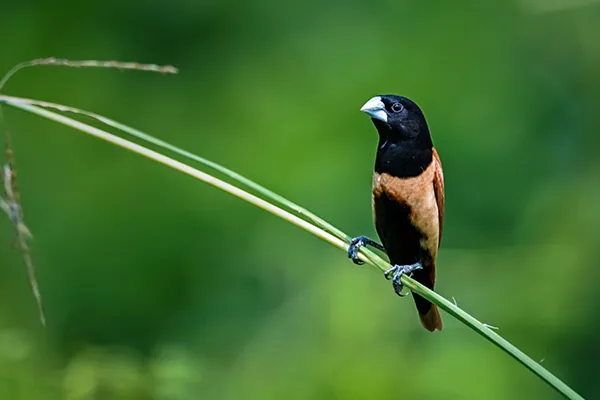
Scientific Name: Lonchura striata
Where Is It Found: Across Asia and the Pacific
Munias, also known as finches, are small, stout birds with conical bills. They often display brownish plumage with various patterns and can be seen in flocks, especially in grasslands and wetlands.
Interesting Facts
- Munias have a unique way of feeding; they pick up a seed with their feet, hold it against the ground, and husk it with their bill.
- They’re popular cage birds and are bred in various colors for the pet trade.
- In some cultures, munias are symbols of happiness and love.
6. Myna
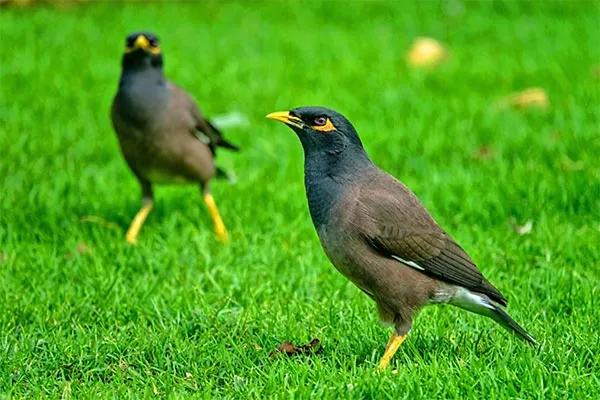
Scientific Name: Acridotheres tristis
Where Is It Found: South Asia, especially in India
The myna is a medium-sized bird with brown body feathers, a bright yellow eye patch, and legs. Known for its robust vocal abilities, it can mimic sounds from its environment, including human voices.
Interesting Facts
- Mynas are considered to be one of the most adaptable and intelligent birds.
- They have a varied diet, including fruits, insects, and even scraps of human food.
- Mynas are often seen walking with a distinctive hop on the ground.
7. Martin
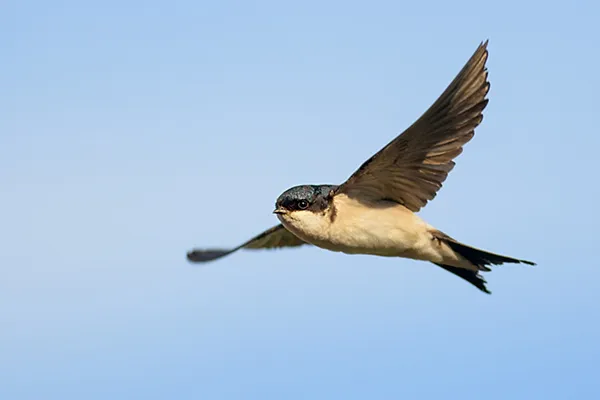
Scientific Name: Delichon urbicum
Where Is It Found: Europe, Africa, and parts of Asia
Martins are small, agile birds with glossy blue-black upper parts and pure white underparts. They are swift fliers, often seen soaring in the sky catching insects mid-air.
Interesting Facts
- Martins are known to build mud nests, often under eaves and bridges.
- They are migratory birds, traveling long distances between breeding and wintering grounds.
- Despite their small size, martins have a loud and cheerful song, often signaling the arrival of spring.
8. Magpie-lark
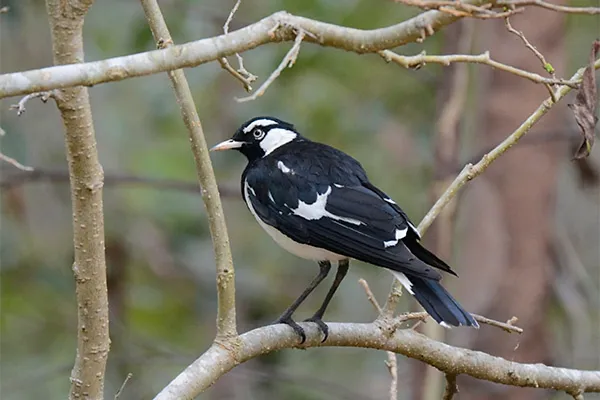
Scientific Name: Grallina cyanoleuca
Where Is It Found: Australia
The magpie-lark is a unique bird with contrasting black and white plumage. It’s not related to true magpies but got its name due to its similar appearance. With long legs, it often feeds on the ground.
Interesting Facts
- Magpie larks are known to build mud nests, similar to martins.
- They often perform a synchronized song and dance routine with their partner, which is fascinating to watch.
- Unlike many birds, both the male and female share the duty of incubating the eggs.
9. Muscovy Duck
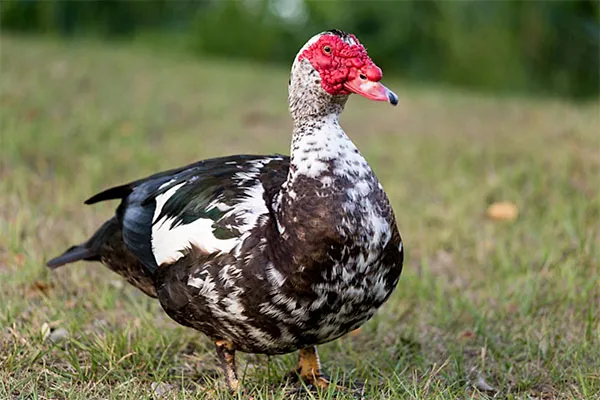
Scientific Name: Cairina moschata
Where Is It Found: Central and South America, but also in parts of North America where they’ve been introduced.
Muscovy ducks have a unique appearance with their bare red face, caruncles, and dark plumage. They are large ducks and prefer freshwater habitats.
Interesting Facts
- Muscovy ducks are often domesticated and bred for meat.
- They are silent most of the time but can hiss or coo when agitated or courting.
- Unlike most ducks, Muscovy ducks are known to perch in trees.
10. Mallard

Scientific Name: Anas platyrhynchos
Where Is It Found: Almost everywhere in the Northern Hemisphere, from North America and Europe to Asia
The mallard is perhaps the most recognized duck worldwide, with the males sporting a glossy green head, white collar, and chestnut-brown chest. Females are mottled brown with an orange bill. Their quacks are iconic, often being the “default” duck sound in many people’s minds.
Interesting Facts
- Mallards are the ancestors of almost all domestic duck breeds.
- They have a varied diet, including aquatic plants, small fish, and insects.
- Mallards are known to display a behavior called “dabbling,” where they tip forward in the water to feed on underwater plants.
11. Masked Booby
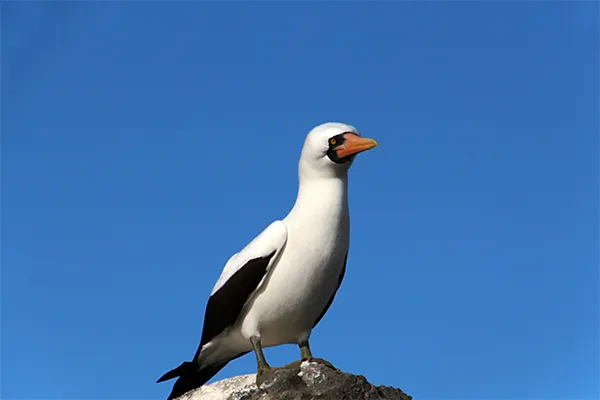
Scientific Name: Sula dactylatra
Where Is It Found: Tropical Pacific and Atlantic Oceans
This large seabird is characterized by its white plumage, black trailing edge to its wings, and a striking yellowish facial mask. Their name “booby” comes from the Spanish word “bobo,” meaning “stupid” or “clown,” referencing their clumsy movements on land.
Interesting Facts
- Masked boobies are incredible divers, plunging into the ocean at high speeds to catch fish.
- They often engage in aerial displays during courtship.
- While they may be clumsy on land, they are graceful fliers, often traveling long distances over the open ocean.
12. Merlin
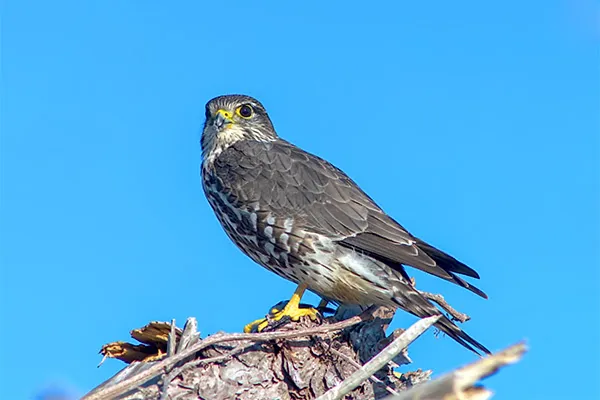
Scientific Name: Falco columbarius
Where Is It Found: Northern regions of North America, Europe, and Asia
A small but powerful bird of prey, the merlin has a blue-grey back, streaked underparts, and a broad, banded tail. Known for its agility, it often preys on smaller birds, which it catches mid-air after a fast and direct flight.
Interesting Facts
- Despite their small size, merlins are fierce and have been used in falconry to hunt even larger birds.
- They have a high-pitched, repetitive call, especially during courtship or when defending their territory.
- During migration, merlins cover vast distances and can travel from Northern Canada to South America.
13. Mountain Bluebird
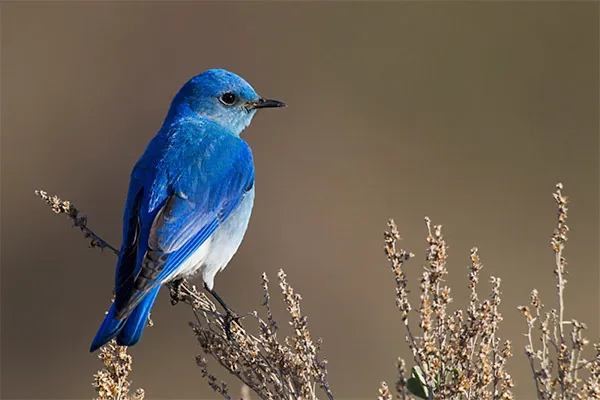
Scientific Name: Sialia currucoides
Where Is It Found: Open country across Western North America
This small, beautiful bird is admired for its vivid blue coloration, which is more intense in males than in females. They’re often seen perched on low branches or wires, scanning the ground for insects.
Interesting Facts
- Mountain bluebirds have been observed hovering in the air, similar to a kestrel while looking for food.
- They often use nest boxes provided by humans, which has helped increase their numbers in some areas.
- Unlike many other bluebirds, mountain bluebirds are mostly insectivorous.
14. Manakin

Scientific Name: Pipridae family
Where Is It Found: The tropical forests of Central and South America
Manakins are small, brightly colored birds with short tails. They are renowned for their intricate courtship displays, which include fast-paced dances and unique vocalizations.
Interesting Facts
- Some species of manakins have specialized wing feathers that produce snapping or buzzing sounds during their dances.
- Male manakins are known to perform on “leks,” small areas where they gather to display and attract females.
- Their rapid dance moves are so fast that they are often best appreciated in slow-motion videos.
15. Marabou Stork
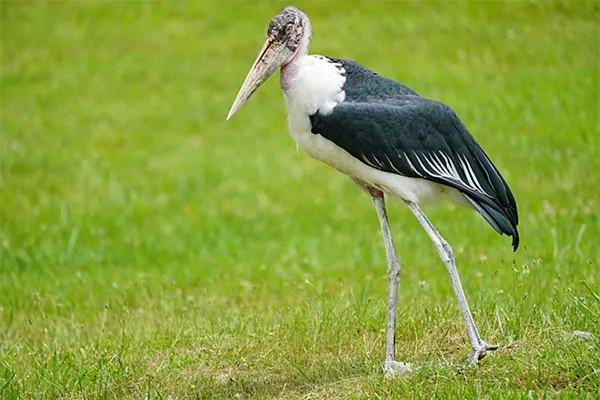
Scientific Name: Leptoptilos crumenifer
Where Is It Found: Sub-Saharan Africa
The marabou stork is a large wading bird with a bald head, a long bill, and long legs. It has black wings and a white underbelly. Often seen scavenging alongside vultures, this bird has a somewhat macabre appearance with its cloak-like wings and dangling pink air sac.
Interesting Facts
- Marabou storks have a wingspan of up to 10.5 feet, making it one of the largest flying birds in terms of wingspan.
- They’re often called “undertaker birds” because of their appearance and scavenging habits.
- The pink air sac on their neck can be inflated to produce a honking sound.
16. Mistle Thrush
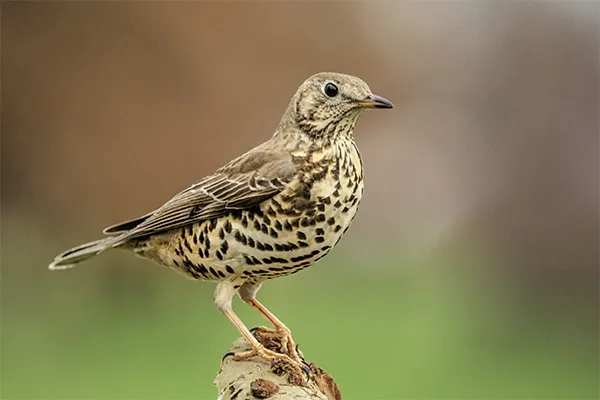
Scientific Name: Turdus viscivorus
Where Is It Found: Across Europe and Asia
This bird is the largest species of thrush in Europe, characterized by its long tail, bold spots on its breast, and its pale, gray-brown upperparts. Its song is loud, far-reaching, and has a flutey tone.
Interesting Facts
- The mistle thrush is known to fiercely defend its food sources, especially berry trees, from other birds.
- Its name comes from its love for mistletoe berries.
- During winter, the mistle thrush’s song can be heard even during stormy weather, earning it the nickname “stormcock.”
17. Mockingbird
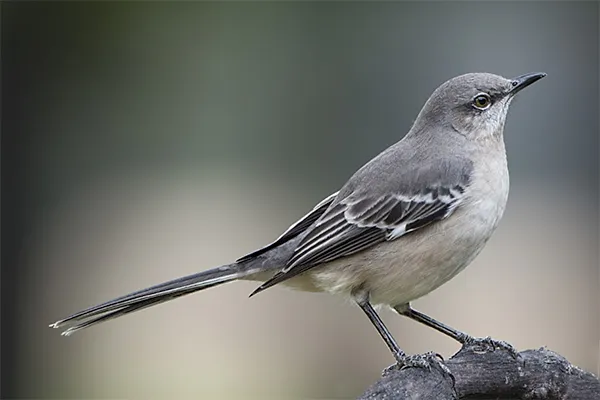
Scientific Name: Mimus polyglottos
Where Is It Found: North America, especially in the southern United States and Mexico
The northern mockingbird is a medium-sized songbird with a long tail and grayish-brown feathers. It’s renowned for its vocal abilities and can mimic other birds, animals, and even mechanical noises.
Interesting Facts
- A single mockingbird can have up to 200 different song variations.
- They are territorial birds and can be seen dive-bombing intruders, including humans, that come too close to their nests.
- The mockingbird is the state bird of Texas, Florida, Tennessee, and Arkansas.
Other Birds Beginning With M
Beyond the detailed profiles we explored earlier, there are numerous other fascinating birds that start with the letter M. These winged creatures, each unique in their own right, further demonstrate the vast biodiversity of the avian kingdom. Here’s a list of additional bird names that begin with the letter M:
- Madagascar Grebe
- Magnificent Frigatebird
- Malabar Hornbill
- Malachite Kingfisher
- Malay Eagle Owl
- Mallard Teal
- Mandarin duck
- Mangrove Cuckoo
- Mangrove Heron
- Mantled Hawk
- Marbled Godwit
- Marbled Murrelet
- Maroon Oriole
- Maroon-chested Ground-Dove
- Marsh Harrier
- Marsh Sandpiper
- Marsh Wren
- Masked Finfoot
- Masked Lapwing
- Masked Trogon
- Maui Alauahio
- Maui Parrotbill
- Mauritius Cuckooshrike
- Maxwell’s Black Weaver
- Mayan Antthrush
- Melodious Blackbird
- Melodious Warbler
- Metallic Starling
- Mexican Sheartail
- Micronesian Imperial Pigeon
- Midway Albatross
- Mikado Pheasant
- Milne-Edwards’s Sifaka
- Mindanao Lorikeet
- Mindoro Bleeding-heart
- Minivet
- Mistletoebird
- Mitchell’s Lorikeet
- Mohoua
- Moluccan King Parrot
- Moluccan Megapode
- Monarch Flycatcher
- Montezuma Oropendola
- Montezuma Quail
- Morepork
- Mountain Avocetbill
- Mountain Plover
- Mountain Serin
With this comprehensive list, anyone intrigued by birds that start with the letter M has a wonderful opportunity to explore further, expanding their knowledge and understanding of the diverse and colorful world of avian species.
FAQs
1. How Can I Identify Birds Beginning with the Letter M in the Wild?
While a bird’s name can give clues, the best way to identify them is by observing their physical characteristics, listening to their calls, and using field guides or apps specific to the region you’re in.
2. Are Any of the “M” Starting Birds Endangered or At Risk?
Yes, several birds that start with the letter M, like many other species, face threats from habitat loss, climate change, and other factors. It’s essential to research and support conservation efforts for these birds.
3. Why Focus on Bird Names Starting with a Specific Letter like ‘M’?
Focusing on bird names starting with a particular letter, like M, provides a structured way to learn and categorize. It can be especially engaging for children and those new to bird-watching, making the learning process fun and systematic.
In delving into the world of birds that start with the letter M, we’ve uncovered a spectrum of species, each with its unique charm and significance. Whether you’re an avid birdwatcher or a curious learner, understanding these avian wonders enriches our appreciation for nature’s incredible diversity.
Birds Names That Begin With (A to Z)
Was This Article Helpful?
- Author