
List of Birds That Start With G





Our editorial process ensures that the information we provide is well-researched and reliable. Learn more about our approach in the FirstCry Parenting editorial policy.
Welcome to our delightful journey through the world of birds, specifically those whose names begin with the letter G. If you’re a bird enthusiast, a curious learner, or a parent looking to enrich your child’s vocabulary, you’ve landed in the perfect spot. Our guide is not just a list; it’s a window into the fascinating avian world. Especially for preschoolers and kids, learning about “bird names that start with letter G” is not only educational but also a fun way to enhance their understanding of nature and wildlife. As we explore these “G letter bird names,” we’ll not only focus on their unique characteristics but also weave in some fun facts to keep our young readers engaged. So, let’s spread our wings and dive into this exciting journey, enhancing kid’s vocabulary with every flap!
List Of Common Birds That Start With G
Embarking on our avian adventure, we delve into the enchanting world of birds beginning with the letter G. This section not only highlights their names and key details but also uncovers some intriguing facts about each. From the majestic Golden Eagle to the charming Goldfinch, each bird name with G reveals a unique story and characteristics, adding a vibrant touch to our understanding of these feathered wonders.
1. Galah

Scientific Name: Eolophus roseicapilla
Where Is It Found: The Galah is native to Australia, thriving in most parts of this vast continent.
With its striking pink and grey plumage, the Galah is a medium-sized cockatoo that’s both a visual delight and a symbol of the Australian bush.
Interesting Facts:
- Galahs are known for their acrobatic antics and can often be seen hanging upside down on branches.
- They form strong lifelong bonds with their partners, embodying a sense of loyalty and togetherness.
2. Gadwall

Scientific Name: Mareca strepera
Where Is It Found: Gadwalls are widespread across North America and Eurasia, favoring wetlands and shallow lakes.
These ducks are modestly colored, with males displaying a subtle pattern of brown and black during the breeding season.
Interesting Facts:
- Gadwalls are adept at stealing food from other ducks, a behavior known as kleptoparasitism.
- Unlike most ducks, Gadwalls often feed by dabbling on the water’s surface rather than diving.
3. Gannet

Scientific Name: Morus bassanus
Where Is It Found: Gannets are primarily found in the North Atlantic, nesting on cliffs and offshore islands.
These large seabirds are striking with their white plumage, black-tipped wings, and a yellowish head.
Interesting Facts
- Gannets have no external nostrils; they are fused shut to prevent water from entering during their high-speed dives.
- They can dive from heights of 30 meters, hitting the water at speeds up to 100 km/h to catch fish.
4. Garden Warbler
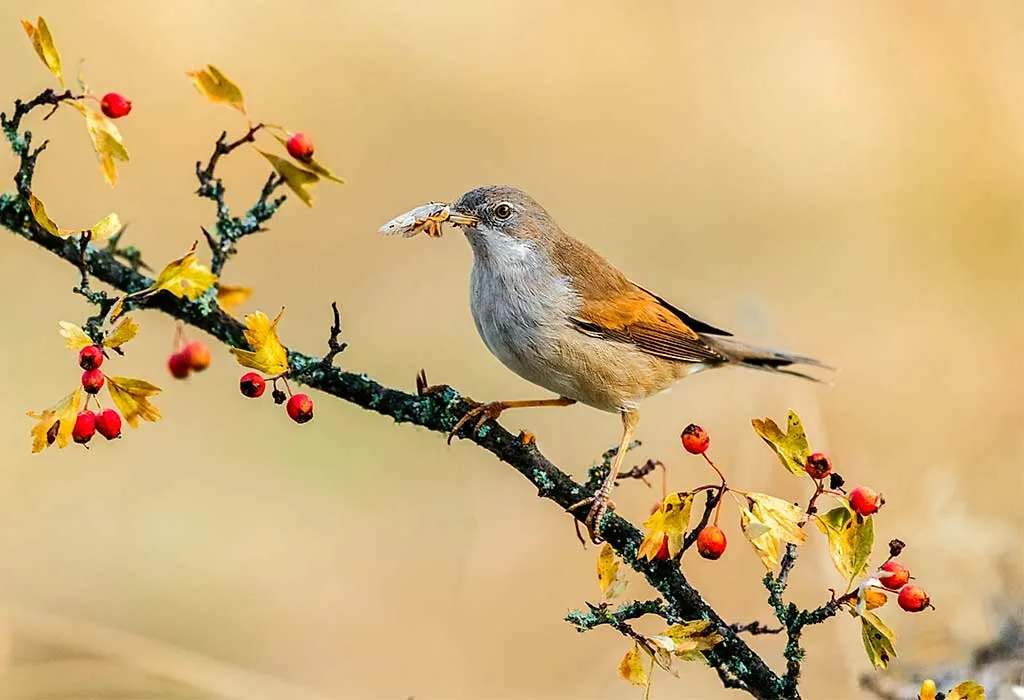
Scientific Name: Sylvia borin
Where Is It Found: Garden Warblers breed in Europe and western Asia, migrating to sub-Saharan Africa in winter.
A small, unassuming bird, the Garden Warbler is brown above and lighter below, with a melodious and varied song.
Interesting Facts:
- Despite their plain appearance, Garden Warblers are fierce defenders of their territory, often seen chasing away intruders.
- They have a varied diet, including insects and berries, adapting easily to different food sources.
5. Garganey

Scientific Name: Spatula querquedula
Where Is It Found: Garganeys breed in Europe and western Asia, wintering in Africa and South Asia.
This small dabbling duck is notable for the male’s distinctive stripe across the eye during the breeding season.
Interesting Facts:
- Garganeys are among the earliest migrating ducks in spring, signaling the change of seasons.
- Unlike many duck species, Garganeys are rarely seen in large flocks, preferring smaller groups or pairs.
6. Glossy Ibis

Scientific Name: Plegadis falcinellus
Where Is It Found: The Glossy Ibis inhabits wetlands worldwide, from Europe and Asia to the Americas and Australia.
This bird is recognized by its iridescent green and purple plumage and a distinctively curved bill, used for foraging in mud.
Interesting Facts:
- The Glossy Ibis changes color slightly during the breeding season, with its feathers taking on a more vibrant sheen.
- It’s a highly sociable bird, often found in large flocks in wetlands, foraging and nesting in close proximity to each other.
7. Golden Eagle

Scientific Name: Aquila chrysaetos
Where Is It Found: Golden Eagles are found in North America, Europe, Asia, and parts of Africa, in mountainous and open habitats.
Renowned for their size and powerful build, these eagles have dark brown plumage with golden feathers on their napes.
Interesting Facts:
- Golden Eagles have one of the largest wingspans of any bird of prey, aiding in their efficient hunting.
- They are known to hunt in pairs, displaying remarkable coordination and skill in capturing prey.
8. Goldfinch

Scientific Name: Carduelis carduelis
Where Is It Found: Goldfinches are widely distributed across Europe, North Africa, western and central Asia, and have been introduced to other regions.
These small, vibrant birds are easily recognized by their red faces and striking yellow wing patches, adding a dash of color to any garden.
Interesting Facts:
- Goldfinches have a particular affinity for thistle seeds, often seen hanging upside down to feed.
- Their melodic song, consisting of a series of twitters and trills, is a pleasant and familiar sound in many habitats.
9. Goshawk

Scientific Name: Accipiter gentilis
Where Is It Found: Goshawks are found in forested areas across the Northern Hemisphere, including North America, Europe, and Asia.
These robust hawks have striking grey plumage, a broad white stripe over the eye, and are known for their agility and speed in flight.
Interesting Facts:
- Goshawks are master hunters, often navigating through dense forests to catch their prey.
- They play a crucial role in their ecosystems, helping to control populations of their prey species.
10. Grasshopper Warbler

Scientific Name: Locustella naevia
Where Is It Found: This small bird breeds in Europe and western Asia, preferring dense vegetation like thickets and grasslands.
The Grasshopper Warbler has a brown, streaky appearance, with a distinctive song that resembles the sound of a grasshopper.
Interesting Facts:
- Their song is so insect-like that it often leads to confusion among those trying to spot them.
- Grasshopper Warblers are nocturnal migrants, traveling under the cover of darkness to their wintering grounds in Africa.
11. Great Blue Heron

Scientific Name: Ardea herodias
Where Is It Found: Great Blue Herons are common across North America, found in both freshwater and saltwater environments.
These large herons are known for their blue-grey plumage, long legs, and habit of standing still for hours while hunting for fish.
Interesting Facts:
- Great Blue Herons can swallow fish many times wider than their narrow necks.
- They have a unique way of shading the water with their wings, creating a shadow to lure fish closer.
12. Great Crested Grebe
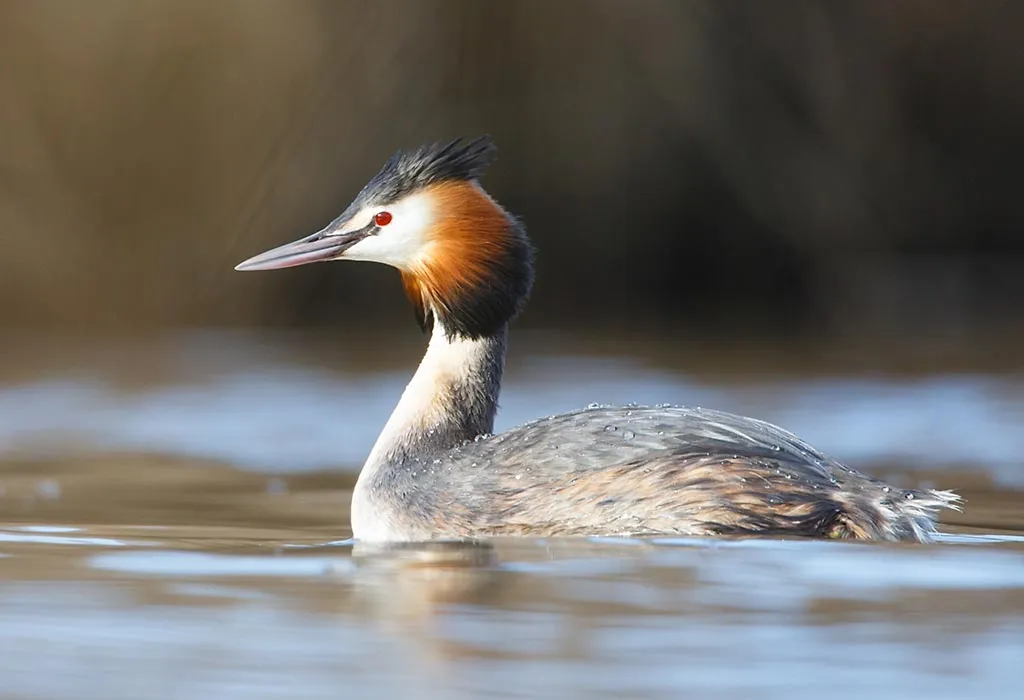
Scientific Name: Podiceps cristatus
Where Is It Found: Found in freshwater lakes and reservoirs across Europe and Asia, these birds are excellent swimmers and divers.
The Great Crested Grebe is known for its elaborate mating dance and beautiful plumage, with distinctive rufous neck feathers and a black crest.
Interesting Facts:
- During their courtship display, these grebes often present each other with water plants, a unique part of their mating ritual.
- They are able to dive for up to a minute at a time, reaching depths to catch fish and aquatic insects.
13. Greenfinch

Scientific Name: Chloris chloris
Where Is It Found: Greenfinches are found across Europe, North Africa, and western Asia, frequenting gardens and woodlands.
These birds are primarily green, with flashes of yellow on the wings, and are known for their pleasant twittering song.
Interesting Facts:
- Greenfinches have adapted well to urban environments and are often seen at bird feeders.
- They were once popular as caged birds due to their melodious song.
14. Grey Heron

Scientific Name: Ardea cinerea
Where Is It Found: Grey Herons are widespread in temperate Europe, Asia, and parts of Africa, usually found near water bodies.
These large birds are similar in appearance to the Great Blue Heron, with long legs, a long neck, and predominantly grey plumage.
Interesting Facts:
- Grey Herons are incredibly patient hunters, often standing motionless for long periods before striking at their prey.
- They are known for their distinctive, loud croaking calls, especially noticeable during the breeding season.
15. Grey Partridge

Scientific Name: Perdix perdix
Where Is It Found: Native to Europe and parts of Asia, Grey Partridges prefer farmlands and open fields.
These ground-dwelling birds have a rotund shape and are known for their grey and brown plumage and distinctive orange face.
Interesting Facts:
- Grey Partridges form monogamous pairs and are known for their ‘churring’ call during the breeding season.
- They play an important role in controlling insect populations in agricultural areas.
Other Birds Beginning With G
In addition to the common birds we’ve already explored, there’s an even wider array of avian species whose names start with the letter G. This section is a quick glance at these other fascinating birds, each contributing uniquely to the rich tapestry of our natural world. Whether you’re an avid birder or a curious nature lover, this list of birds that start with the letter G will further expand your knowledge and appreciation of these winged wonders.
- Gabbler
- Gabon Coucal
- Gabon Woodpecker
- Gadfly Petrel
- Gageo Leaf Warbler
- Galapagos Cormorant
- Galapagos Dove
- Galapagos Hawk
- Galapagos Martin
- Galapagos Mockingbird
- Galapagos Penguin
- Galapagos Petrel
- Galapagos Rail
- Galapagos Shearwater
- Galapagos Storm Petrel
- Galapagos Thrush
- Galiwinku Honeyeater
- Gallinule
- Gambaga Flycatcher
- Gambel’s Quail
- Gambia Sunbird
- Gannetbill
- Garden Emerald
- Garnet Pitta
- Garrulax Laughingthrush
- Gary Heron
- Gashora Warbler
- Gaudy Nightjar
- Gavilan
- Gavilán Pollero
- Gavotte Gull
- Gayal Cuckoo
- Gazebo Sunbird
- Geelvink Pygmy Parrot
- Gelada Baboon
- Gelasian Nightjar
- Gelbschnabelente
- Gembira Weaver
- Gendarme Weaver
- Genovesa Cactus Finch
- Geoffroy’s Tamarin
- George’s Hummingbird
- Gerenuk
- Gergely’s Monarch
- German’s Warbler
- Gernot’s Batis
- Geronticus Ibis
- Gerridae
- Gerygone Warbler
- Gettysburg Wren
FAQs
1. What Is The Most Common Bird That Starts With The Letter G?
The most common bird that starts with G is likely the Goldfinch, known for its bright yellow wing patches and cheerful song, commonly found in gardens and woodlands across Europe, North America, and parts of Asia.
2. Are There Any Endangered Birds Whose Names Start With G?
Yes, the Galapagos Penguin, whose name starts with G, is considered endangered, facing threats from climate change and human activities, and is unique for being the only penguin species found north of the equator.
3. Can Children Easily Recognize Birds That Start With The Letter G?
Children can easily recognize several birds that start with the letter G, such as the Goldfinch and Galah, due to their distinctive colors and patterns, making these birds excellent for educational purposes and enhancing kids’ vocabulary.
In conclusion, the avian world is rich and diverse, with a fascinating array of birds whose names begin with the letter G. From the playful Galah to the elegant Great Blue Heron, each bird offers a unique glimpse into the wonders of nature. This journey through the alphabet of birds not only enhances our knowledge but also deepens our appreciation for the incredible diversity of our feathered friends.
Was This Article Helpful?
Parenting is a huge responsibility, for you as a caregiver, but also for us as a parenting content platform. We understand that and take our responsibility of creating credible content seriously. FirstCry Parenting articles are written and published only after extensive research using factually sound references to deliver quality content that is accurate, validated by experts, and completely reliable. To understand how we go about creating content that is credible, read our editorial policy here.
- Author