
Essay On Savitribai Phule – 10 Lines, Short and Long Essay for Children and Students





Our editorial process ensures that the information we provide is well-researched and reliable. Learn more about our approach in the FirstCry Parenting editorial policy.
The art of essay writing is a wonderful journey that helps students express their thoughts, ideas, and understanding of various topics. It enhances vocabulary, encourages critical thinking, and empowers learners to communicate more effectively. Our topic for today’s discussion, the “Savitribai Phule essay in English,” will enlighten young minds about a monumental figure in Indian history. This essay for students will provide insights into the life and achievements of Savitribai Phule, emphasizing her role as an educational reformer and social activist. So, fasten your seatbelts, young scholars, as we embark on this captivating journey!
Key Points to Remember When Writing An Essay On Savitribai Phule
Writing about Savitribai Phule requires an understanding of her significant contributions to Indian society, especially in the domain of women’s education and social reform. To capture her essence and present it accurately, here are some crucial points to consider:
- Historical Context: Savitribai lived during the 19th century in India, a time when women’s rights and education were largely neglected. Understanding this context will add depth to your essay.
- Pioneering Educator: Emphasize that she was among the first to champion girls’ education in India. With her husband, Jyotirao Phule, she founded the first girls’ school in Pune.
- Social Reformer: Besides education, she vehemently opposed child marriage and worked towards the welfare of widows, often considered outcasts during her time.
- Literary Contributions: Savitribai was also a poet. Her poems conveyed messages about social reform and spoke against discrimination and injustice.
- Personal Challenges: Highlight the societal backlash she faced. She was often criticized and even attacked for her beliefs, but her resilience saw her through.
- Legacy: It’s essential to underline the impact she left behind. Many institutions and awards in India today bear her name, commemorating her work.
10 Lines On Savitribai Phule
For our young readers, especially those in the lower primary sections, understanding the depth and breadth of historical figures can sometimes be challenging. However, presenting a brief overview, like these “few lines on Savitribai Phule”, can be a great starting point. This essay for lower primary students aims to simplify her life story while ensuring the essence remains.
1. Savitribai Phule was a famous social activist and poet from India.
2. Born on January 3rd, 1831, she hails from Maharashtra.
3. She bravely fought for women’s rights, especially their right to education.
4. Along with her husband, Jyotirao Phule, she started the first girls’ school in Pune.
5. Savitribai faced much criticism for her work, but she never gave up.
6. She also stood against child marriages and supported widows.
7. As a poet, her writings spread messages of equality and social justice.
8. Sadly, she passed away in 1897, but her legacy still shines bright.
9. Many institutions in India are named in her honor, celebrating her efforts.
10. Today, she’s remembered as a beacon of hope, championing women’s rights and education.
A Paragraph on Savitribai Phule
When we dive deeper into the annals of Indian history, certain figures stand out not just for their deeds but for the lasting change they brought about. Savitribai Phule is one such luminary, her story intertwining the struggles and aspirations of countless women she uplifted. Here’s a brief glimpse into her life:
Savitribai Phule, born in 1831, was more than just a social activist; she was a beacon of hope in an era where women’s rights were largely dismissed. Along with her husband, Jyotirao Phule, she pioneered the cause for women’s education in India, establishing the first school for girls in Pune. But her influence didn’t stop there. As a poet, her writings vocalized the cries of the marginalized, advocating for social justice and equality. While she faced severe backlash, her indomitable spirit and unwavering commitment to her causes have solidified her place as a formidable icon in Indian history.
Short Essay On Savitribai Phule
Diving into the lives of iconic figures often presents us with tales of valor, determination, and resilience. Savitribai Phule’s journey is one such narrative that resonates with inspiration and provides lessons of perseverance. Let’s delve into a short essay on her illustrious life.
Savitribai Phule, often hailed as the mother of Indian women’s education, was a trailblazer in the truest sense. Born in a time when societal norms were constrictive, especially for women, she defied these limitations and embarked on a mission to empower women through education. With the unwavering support of her husband, Jyotirao Phule, she founded the first-ever school for girls in Pune, Maharashtra. This was a revolutionary step, given the prevailing biases against educating women.
But Savitribai’s contributions weren’t limited to the realm of education. She vehemently opposed the age-old practices of child marriage and the ostracization of widows. Her poetic works echoed her reformist views, aiming to bring about societal transformation. She faced numerous challenges, both physical and emotional, including being pelted with stones and mud for her groundbreaking endeavors. Yet she remained undeterred.
Today, Savitribai Phule stands as a testament to the power of determination and the change that one individual can usher in. Through her life’s work, she sowed the seeds for a more inclusive and equitable society.
Long Essay On Savitribai Phule in English
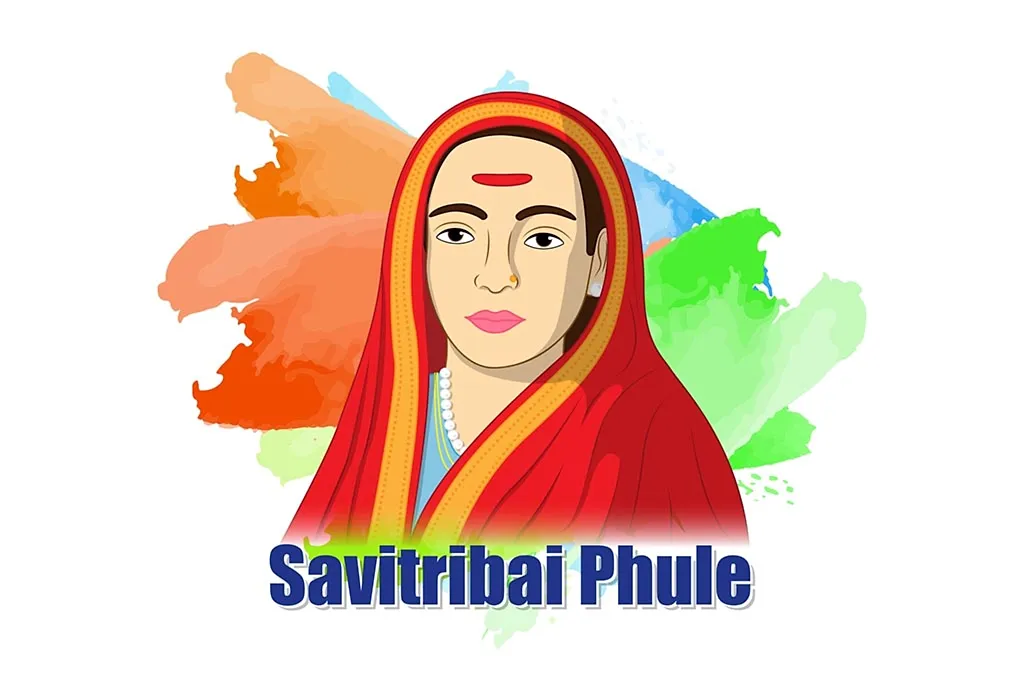
Every so often, history gifts us personalities who challenge the status quo and usher in transformative change. Savitribai Phule is one such towering figure in the annals of Indian history. This essay seeks to explore the life and contributions of Savitribai Phule, casting light on her invaluable role in shaping women’s rights and education in India.
Early Life Of Savitribai Phule
- Born on January 3, 1831, in Naigaon, Maharashtra, Savitribai belonged to the Mali community, which was considered a backward caste.
- She was married to Jyotirao Phule at the tender age of nine, a norm prevalent during that era.
- Savitribai and Jyotirao shared a unique bond, with the latter advocating for her education, an uncommon stance in those times.
- In a society steeped in patriarchal norms, the couple’s progressive outlook sets them apart.
- The challenges and discrimination they witnessed became the foundation of their later reformist endeavors.
- Their home often became a refuge for women in distress, underscoring their commitment to social upliftment.
Education Of Savitribai Phule
- Savitribai’s education journey began after her marriage, with Jyotirao being her first teacher.
- She learned to read and write, a feat rarely achieved by women of her time.
- Recognizing her immense potential and passion for learning, Jyotirao further ensured she received a formal education.
- Later, Savitribai enrolled in two teacher’s training programs, making her one of the first trained female educators in India.
- In a society where women’s education was frowned upon, her academic pursuits were nothing short of revolutionary.
- Her educational achievements weren’t merely personal; they became instrumental in her larger mission to educate girls.
- She also learned English, which expanded her horizons and enabled her to connect with a broader audience.
Contribution Of Savitribai Phule in Education
- The Phule couple’s commitment to education culminated in the establishment of the first school for girls in Pune in 1848.
- Savitribai served as the school’s first teacher, setting a precedent for many more to follow.
- The couple faced severe backlash, including public ridicule and even physical attacks, for promoting girls’ education.
- Undeterred, they went on to establish several more schools, emphasizing education for girls and the underprivileged.
- Savitribai’s curriculum was progressive, focusing not just on traditional subjects but also on promoting critical thinking and social awareness.
- She introduced stipends to encourage parents to send their daughters to school, understanding the economic constraints many faced.
- The Phule couple also championed adult education, exemplifying their holistic approach to knowledge dissemination.
Death Of Savitribai Phule
Savitribai Phule’s life, though filled with challenges, was a beacon of hope and resilience. Her journey tragically came to an end on March 10, 1897. While caring for plague victims in Pune, she too contracted the disease and succumbed to it. Her death marked the end of an era, but her legacy continued to inspire generations. Her pioneering efforts in education, her relentless fight for women’s rights, and her spirit of social reform continue to be celebrated, making her a timeless icon in Indian history.
Interesting Facts About Savitribai Phule for Kids
Every historical figure has a treasure trove of fascinating anecdotes and lesser-known tidbits that make their story even more compelling. Savitribai Phule is no exception. As you journey through this “Savitribai Phule essay”, here are some intriguing facts about her that will surely captivate the curious minds of young learners:
- Pioneering Poet: While many know her as an educator, Savitribai was also an accomplished poet. Her poems often revolved around themes of social reform, emphasizing equality and justice.
- First Female Teacher: Savitribai holds the distinction of being the first female teacher of the first girls’ school in India, making her a true pioneer in women’s education.
- A School in Their Home: To overcome societal opposition to female education, the Phule couple initially conducted classes in their own home, turning it into a safe haven for learning.
- The Umbrella Story: On her way to school, Savitribai often faced mud and stones thrown at her by orthodox men opposed to her work. Her friend and fellow teacher, Fatima Sheikh, gave her an umbrella to shield herself, symbolizing solidarity and support.
- Adoption Advocate: Savitribai and Jyotirao adopted a child from a Brahmin widow, a radical move at the time, highlighting their progressive stance against caste and gender biases.
- Infanticide Prevention: Aware of the high rates of female infanticide, Savitribai opened a care center for pregnant rape victims, helping them deliver their children and ensuring their safety.
What Will Your Child Learn From the Essay On Savitribai Phule?
Your child will discover Savitribai Phule’s groundbreaking role in championing women’s education in 19th-century India. They’ll understand her dedication to combating social prejudices and her endeavors in eradicating untouchability and caste discrimination. Through the essay, they’ll also recognize her enduring impact as a stalwart social reformer and her commitment to women’s rights and empowerment.
FAQs
1. What Is the Famous Quote by Savitribai Phule?
One of the most renowned quotes attributed to Savitribai Phule is, “Awake, arise, and educate; smash traditions; liberate.” This quote encapsulates her firm belief in the transformative power of education and her call for societal change.
2. Was Savitribai Phule a Freedom Fighter?
While Savitribai Phule is primarily celebrated for her contributions to women’s education and social reform, she wasn’t directly involved as a freedom fighter in the Indian Independence movement. However, her efforts laid the foundation for a more inclusive and progressive society, indirectly supporting the broader cause of freedom.
3. Where can I learn more about Savitribai Phule’s life and work?
For a deeper dive into Savitribai Phule’s life and contributions, numerous books, academic papers, and documentaries are available. Many educational institutions, especially in India, offer detailed courses and seminars on her life, and visiting the Savitribai Phule Pune University can also provide a wealth of resources and insights.
Savitribai Phule’s life serves as a shining beacon, illuminating the path of progress and equality in a time when societal norms sought to dim such aspirations. Her relentless spirit, undying commitment to education, and advocacy for women’s rights have forever etched her name in the annals of history, inspiring generations to strive for a just and equitable world.
Also Read:
Tips for Teaching Essay Writing for Kids
Essay On My Favorite Personality: 10 Lines, Short and Long Essay
Was This Article Helpful?
- Author